
Communicating Sustainability's Value to CRE Investors
Real Estate/REITEmily Pierce, VP of Impact at Acento Real Estate Partners, offers practical wisdom on implementing sustainability practices in multi-family housing.
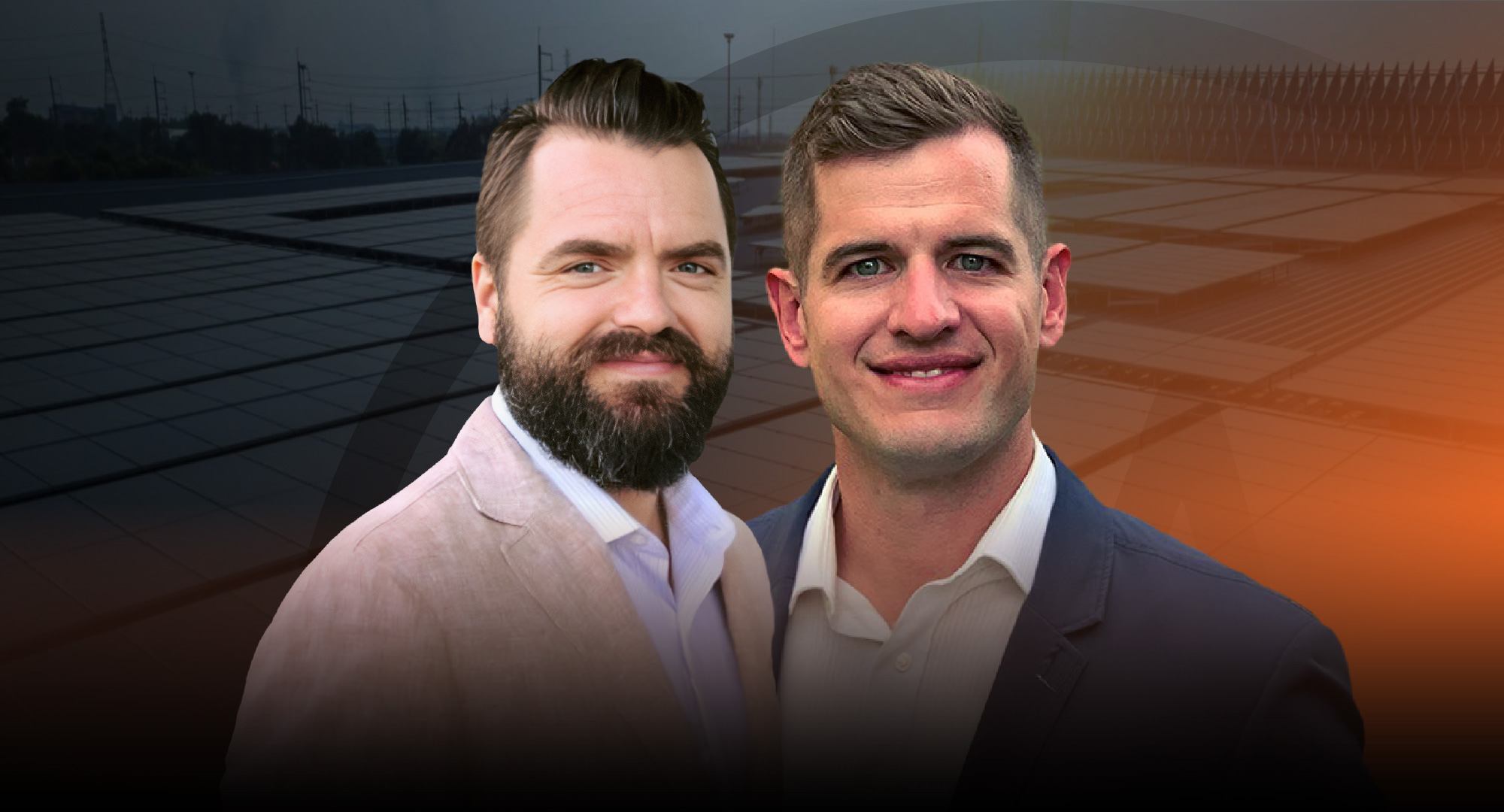
What does it really take to implement sustainability in workforce housing? Emily Pierce, VP of Impact at Acento Real Estate Partners, offers practical wisdom on this topic in this episode of The Future of CRE Sustainability. Emily tells Sean about the unique challenges of bringing environmental initiatives to multi-family properties, from managing split incentives across hundreds of units to building cross-departmental support.
She also explains how Acento is making sustainability accessible through practical approaches like EV charging stations and solar initiatives, while maintaining strong financial performance. Emily touches on the importance of relationship building, effective communication, and speaking the language of different stakeholders are crucial for success in scaling sustainability programs across real estate portfolios.
Topics discussed:
- Implementing comprehensive sustainability strategies in workforce housing while managing unique challenges of multi-family properties including split incentives and tenant engagement.
- Strategic approach to building cross-departmental support through effective communication and relationship building, focusing on stakeholder-specific benefits and metrics.
- Analyzing and implementing sustainability initiatives like EV charging and solar projects with careful consideration of lease structures and property characteristics.
- Balancing environmental impact with financial returns through systematic property assessment, energy audits, and strategic project prioritization.
- Integration of technology and software solutions for monitoring building performance and identifying sustainability opportunities across the portfolio.
- Evolution of sustainability reporting frameworks and their impact on institutional investment, with focus on GRESB and TCFD standards.
- Navigating policy changes and government requirements while maintaining focus on private sector opportunities for environmental initiatives.
- Strategic approach to education and communication for driving behavioral changes and building support for sustainability programs.
- Impact of natural disasters and climate events on market trends and their influence on risk assessment and resilience planning.
- Development of comprehensive sustainability strategies that combine technological solutions with behavioral change initiatives for maximum impact.
Previous Episodes
Listen
Transcript
Note: This transcript was auto-generated and may contain minor errors.
Sean Swentek: Hello, and welcome to another episode of The Future of CRE Sustainability. I’m Sean Swentek, your host. Today, I’m joined by Emily Pierce, Vice President of Sustainability and Impact at Acento Real Estate Partners. Emily, thank you so much for joining me today.
Emily Pierce: Thank you so much for having me. I’m excited to chat with you.
Sean Swentek: Emily, what was the market opportunity that Acento recognized, and how has sustainability shaped the progress of the company over the years?
Emily Pierce: The best way to answer that probably would be leading to the impetus of my hiring. What pushed Acento before I even knew who Acento was and what the company really stood for. There had been people in similar positions and in my role getting things started, foundationalizing the ESG strategy, researching, analyzing, getting those building blocks in place. I think it was at that point that Acento really realized that implementing a lot of these projects that we, they, others have spent a lot of time talking about, the time was ripe. The time was ripe to actually harness a portion of the market where multifamily companies haven’t always excelled. I think it’s been figured out, quote, unquote, in the office world. Not that every office is super sustainable and perfect in that realm, but the playbook is kind of there for offices. And in my past life, that was where I came from, from offices. So I do know a little bit about that side. But I think multifamily companies tend to lag behind a little bit just by nature of some of the differences of multifamily lease structures and properties and all that. And so Acento really saw the opportunity there to set us aside or apart from others, put us in a competitive edge, tell the great stories, and do the good things that come with energy and sustainability and water and all those savings and efficiency projects.
Sean Swentek: Emily, do you want to double click on some of the unique challenges for multifamily when it comes to sustainability?
Emily Pierce: Yeah, sure. So I think the biggest part is you have a whole lot of tenants. I think that’s the biggest difference. If you’re going to compare it apples to apples or apples to oranges with office to multifamily, in an office building, you may have, sure you could have a huge high rise office building where you have hundreds of tenants. But typically, number of tenants that you’re dealing with, the number of lease structures you’re dealing with, they’re fewer than when you introduce a four hundred unit property. So all of Acento’s properties are garden style properties, and we have anywhere from low hundreds up to four hundreds of units per property. And so that’s four hundred leases. That’s four hundred leases and four hundred opportunities or four hundred pain points. So I think that’s the biggest difference when you compare it to some of the other market types and asset classes. And I think the other one is the split incentive. Not that the split incentive is unique. It exists everywhere that there’s a landlord and a tenant. But you don’t have four hundred split incentives if you’re talking about a building of that size. And in this case, you’re dealing with people, not companies. It’s intimate to them because this is their homes. These are, we’re quote unquote just a company, but this is their home. These are the places that they call home, that they live in, that they work in potentially, that they build their families in. And that puts us in a really unique position because it’s not just a legal counsel or somebody else’s money or that sort of situation when you’re dealing with office leases. So I think all of those things combined make multifamily particularly difficult. Keeping going down that, then that obviously means you have a whole bunch of different pieces of equipment and all of that. So you can keep peeling back those layers about what the size and the lease structure and multifamily means and why it can be difficult or the opportunity is greater.
Sean Swentek: Well, it’s safe to say Acento must have solved some of those problems because you’re here today and you’ve driven a lot of success around sustainability within the portfolio. What are some of the impactful metrics around sustainability? What helps drive and shape investment decisions in commercial real estate portfolios like yours at Acento that actually encourage these sustainability practices?
Emily Pierce: I don’t want to claim too much credit. I think we’re still very much in progress. I think we’re still very much building the sustainability case internally and externally. And when I say externally, investors, stakeholders, everybody, we still have to deal with that. We are a private company, so we don’t have SEC, for example, bleeding down our necks. But we’re still very much figuring it out. I don’t pretend that we have all the answers and the crystal ball to everything. But I think the most important thing and how I think about strategically my job and whenever there’s a decision that we have to make, you have to speak the language of whoever you’re speaking to. And that’s not just sustainability. Sustainability is part of it. But most of the people that I work with internally that are helping me make these decisions don’t speak sustainability. In a past life, I worked very closely with a CFO. And I remember her saying to me, she said, you don’t speak my language and I don’t speak your language, and we speak enough of each other’s language to understand and get by. But I’m fluent in one language and you’re fluent in another. And it’s so true. I mean, sustainability people know finance enough to be dangerous, enough to do our jobs, enough to really drive things home. But we would be CFOs if finance was our first language. So I think it’s important to speak the language of the specific audience. So you’re talking to investors, IRR is probably what they want to hear. If you’re talking about your residents and the units and tenant spaces, they care that their utility bills are a hundred dollars a month more or whatever it is more in that given month. Dollars speak to everybody, but dollars translated in IRR versus a utility bill for a resident are very different. So it’s just tweaking that same message and speaking the language, kind of meeting people where they are.
Sean Swentek: I love that. It almost feels like another split incentive when you talk about the finance person and your sustainability initiatives. How do you balance those initiatives against those return on investment goals within the organization?
Emily Pierce: I think it’s just that. I think it’s finding the balance. I know that might feel a little bit like a cop out, but it’s understanding that you’re not going to win all of them. Sustainability is not going to win all decisions. There’s going to be some that just financially are not going to pencil out, and that’s okay. But it’s being able to tell the story and again, speak that language. An example that I think of is in my past life, and we just haven’t done this at Acento, but it could very well be happening at any multifamily company. There’s all sorts of projects going on on a regular basis, on a monthly, on an annual basis. The property management team, maintenance team, they’re working on all sorts of stuff. And if there’s not education and communication to what is an ESG project, you could miss a whole bunch of communicated and marked savings. So HVACs in this property are going out. We need to replace twenty percent of the HVAC units for all of our units, for all the tenant units in the next year, just to give you an example. Okay, well, if they’re just going to replace those, the operations maintenance team, construction team, they have their charge to replace them. That’s a sustainability project or at least an opportunity. And so if you’re not finding those kind of glimmers of collaboration, you’re potentially missing opportunities to make something that wasn’t a sustainability project, quote, unquote, a sustainability project suddenly now labeled as sustainability. In my past life, it was quite literally as simple as in our budget software, we added an ESG line item or a label. And so when our asset managers and property teams were going in and creating budgets for their year, for the coming year, they added a sustainability label. Tremendous amount of education that had to come with that, what is sustainability. You painting the walls, that’s not ESG. But so I think it’s just educating and finding those opportunities that are already going on, and people may not realize it that there’s sustainability.
Sean Swentek: Which sustainability practices and programs are you seeing gaining traction in the US CRE market, especially with multifamily?
Emily Pierce: I mean, I think everything if we’re looking at US to international, to not US, I think everything that happens in Europe is eventually going to happen here. That’s my personal opinion. Well, eventually is the keyword. I think the timeline that it happens is the biggest question mark. If you want to bring it more domestic example, I use California in the same way that I kind of use Europe as an example. What’s happening in Europe? What’s happening in Australia? What happens in California? California was one of the first states to start passing gas natural gas bans and taxing gases and electrifying their cities and all that. And it’s slowly starting to make its way. Maryland’s really advanced. Maryland’s a great state for that. But I think everything that’s happening internationally, the US is eventually going to pick up. I think benchmarking and reporting, we’re seeing that. Europe’s been doing some semblance of that, whether it’s through these reporting frameworks or whether it’s through federally mandated programs. And we’re seeing that in the US, but I think the need to adhere to them is one area that we’ll see pick up. That might slow down over the next few years with the current administration, but I think eventually we’ll see that continue.
Sean Swentek: And this might be changing from today to a few months down the line, but how are government sustainability requirements today influencing private sector real estate standards?
Emily Pierce: That’s a particularly down home question for me because in my past life, in my office landlord life, our bread and butter was GSA leases, so federally leased buildings. And so there was where it would hit first, any of the buildings with the federal government leases. I think the answer is it was starting to impact those buildings that were federally leased. And then the next step would be those buildings that are not federally leased, that are private sector. So I think we’re still a little ways from that, but I think the Biden administration put a lot of building blocks in place with the ITC, with the IRA, with all sorts of programs and incentives and foundational building blocks that I’m sure was the administration’s aim was to kind of set those in motion. A lot of those have been codified into law now. So they’re not going anywhere at least in the immediate future. But I think other than that, federal standards tend not to be the biggest driver for the private sector. So I think you’re seeing a little bit of that trickle down. But I think other than that, federal government isn’t usually where we’re looking in the private sector for better or for worse, which I work in the private sector. So I think there’s tremendous opportunity and ability to push some of our agenda forward and push projects forward more so than maybe on the federal side. But there’s a lot of people there on the federal side doing really great work, and they need to be there. So it’s whatever drives you.
Sean Swentek: Absolutely. What’s an unexpected way that ESG initiatives have improved operational efficiency in your portfolio?
Emily Pierce: Again, I think part of that is education and communication so that everybody knows, it’s not necessarily an ESG initiative. It’s not necessarily a sustainability project. You may already be doing it. So it’s kind of a roundabout way to answer, but communicating so that everybody knows what you were doing was sustainability. You just may not have been calling it sustainability. So it’s not necessarily a huge leap on my end or my team’s end, but it is an educational opportunity. It is a communicational opportunity. But I think beyond that, the integration of departments I think is really, really important. So my maintenance team, for example, they don’t necessarily care how many kilowatts and kilowatt hours we’re recording and how much energy we use and what about that. But they do care how many maintenance calls they’re getting. They do care that the HVAC units are continuing to cause issues, and they’re getting hot calls and cold calls. And they have to replace them, and there’s a lot of personnel and OpEx that has to go into it, and they care about that. So being able to communicate that and tell that story, suddenly taking all of those lessons, you can then explain to not only your operational team, but your CEO, your CFO. Let’s modernize those HVACs. Let’s electrify. Let’s move towards a more efficient system because it’s not just about utility savings. It’s not just about kilowatts, kilowatt hours. It’s metrics that they maybe don’t necessarily care about. It’s, again, speaking the language that they speak and using it so that everybody can kind of come together on a similar mission whether or not they realized before that we were all on the same mission.
Sean Swentek: You made me think about something when you mentioned your maintenance crew. Are you at a stage yet at Acento where IoT and technology is meaningfully driving reduction in the need for human intervention on-site? Are you able to use technology to remotely understand your building’s performance and efficiency? Or where are you going with that in the future?
Emily Pierce: We aren’t personally. Where we’re, because Acento is workforce housing. So we’re not going to be the crazy, crazy rents in a three bedroom penthouse in New York City. That’s not us. We’re a little bit more down home workforce housing. We’re not officially affordable housing, but it’s a lot of the same census tracks and all that. So our buildings are not necessarily those IoT, technology, super advanced, all of that. But I think one area that, while it may not officially be labeled as IoT, we don’t necessarily give as much credit as I think maybe is due to all the softwares that are out there. The ESG, the environmental softwares that it’s not real time per se, but it’s utility bills that are pushing into the system, and there’s all sorts of checks and balances and alarms and alerts that can be set off. And I mean, just recently, we had a situation where a water bill was, I mean, like, four, five, six, seven. I mean, it was tremendously, just crazy, crazy, crazy high. It ended up being a malfunctioning meter, but alarms were set off in our software systems saying, hey, something’s weird here. Something’s going on, which then triggered a utility audit. They sent their people out. I got looped in to see if there was a leak situation. So all of those steps that should happen did happen. Obviously, it would be better if it was real time down to the day, down to the week, down to the whatever. But we can at least give a lot of credit that maybe ten years ago, this wasn’t as typical and expected that every company had this kind of software if they had any sort of ESG program.
Sean Swentek: Yeah. It’s a more desirable alerting structure than the downstairs neighbor reporting the wet ceiling, right?
Emily Pierce: So very much happens. But yeah.
Sean Swentek: How do you prioritize sustainability investments across different properties and tenant needs?
Emily Pierce: So I think really understanding lease structure, it goes back to that. Acento doesn’t have, we do have some buildings that are master metered. So it’s not one size fits all even within our own company. And that’s largely on me and my team to be able to identify the differences and then, likewise, what the opportunities are from those differences. So you’re not going to go after a solar rooftop array on a property that’s not master metered, for example, or at least in my personal opinion, I wouldn’t recommend that. Maybe others are. I don’t know. But in my experience, it’s just not going to pencil out. That doesn’t make a whole ton of sense. But is there something you can do such as solar carports to offset some of the common area energy usage? Are there is there enough common area rooftop that it can be a rooftop array just on the common area to offset common area? So you have to prioritize kind of in different silos, in different columns, if you will. So maybe you have a strategy for master metered buildings, and maybe you have a strategy for the type, the size of building. For us, it’s all garden style, so that wouldn’t really be applicable. But you kind of have to prioritize and categorize. I also lean heavily on energy audits to be able to say we go through and analyze our whole portfolio from a thirty thousand foot level. Hey, which are the buildings that we might want to get energy audits done this year? Obviously, we have about thirty properties. Not going to do thirty energy audits in one year. Sure, that would be great. I would love to have that information, but I’m not going to do all of those projects that I would want to from thirty energy audits. So by the time we get back to some of those projects, that data is going to be stale. So you’ve just wasted however much capital you put out to do all those energy audits. So we kind of go through instead systematically, look at the portfolio, figure out which properties we want to get those energy audits done, get the energy audits done, review and analyze what they’re saying. And then in the following year, two years, whatever the CapEx outlay plan is from there, prioritizing those investments. So I think it’s a lot about understanding each building, each lease structure, each difference, and not applying just a blanket strategy to everything.
Sean Swentek: What sustainability reporting frameworks are proving most valuable especially for attracting institutional investment?
Emily Pierce: So I think whichever ones your investors have heard of. That would be my most honest answer because I remember my past, before I came into my past role, some of the investors for that company were saying, well, what’s this GRESB thing? Should we be doing it? Is it important? What should we be doing? And when I came in, was like, well, yeah. Yeah. We should be. It’s kind of a big deal. A lot of people do do it. And so to answer your question, I do think GRESB remains, obviously, for real estate specifically, it remains a very important framework. But I think followed closely behind that is probably TCFD just because I think in the last year, two, three, you’ve started seeing this consolidation, the that everybody in our world talks about the consolidation of the alphabet soup and all the acronyms. And in that consolidation, you see really, really frequently that TCFD is pointed to. If it’s not necessarily TCFD in its true form, it’s we’re using TCFD frameworks or we’re mirroring it or we’re taking inspiration from it or whatever it is. So I think I kind of view TCFD these days as kind of a grassroots almost. That’s not giving it enough credit, but grassroots in the sense that it’s maybe foundational is a better way than grassroots to explain it in that a lot of other frameworks, states, countries, cities are pointing to things like TCFD, and it’s offering a much more uniform, uniform place to, uniform reporting framework to point to than, again, that alphabet soup. But I think GRESB remains very, very important. Acento is not currently doing any of those reporting only just because of some of the early stages of some of our ESG work. And, again, being a private company, we have a little bit of luxury in being able to kind of push some of that reporting. But whatever your investors have heard about, then they probably want you to report to that one.
Sean Swentek: I can assure you that in the renewable energy space, the acronym soup is no different than what you’re concerned about.
Emily Pierce: Yeah.
Sean Swentek: How can commercial real estate firms better leverage environmental performance data?
Emily Pierce: I think what needs to happen is when you’re communicating with stakeholders, it’s making sure that you’re taking the pieces of that environmental performance data that they understand. I’ve said it a few times, the speaking the language that they speak kind of thing. But they don’t always speak kilowatt hours. They’re not, whoever they is in this, you need to speak the language that’s going to resonate with them. But I think in all environmental performance data, you have dollars somewhere. Hopefully, dollars saved, but dollars are represented. And so speaking, translating that environmental performance data into the language that others speak that are not in our world, that don’t live this day in and day out, and using it in a manner that is going to resonate with them. I think that’s really where the environmental performance data comes in most handy because it’s really just people in my seat and my team and people in our industry that get really down and wonky into the weeds with spreadsheets and the environmental data. And that won’t go away, and that shouldn’t because that is our world. But pulling the pieces of environmental data off that makes sense to others, that’s I think where the biggest opportunity is.
Sean Swentek: What policy changes could accelerate sustainable development in the commercial real estate world?
Emily Pierce: Policy changes specifically, potentially an unpopular opinion, but I think carbon tax. I think some sort of carbon tax is the only policy, not one of the only policies that is going to have the biggest impact. I alluded to the federal side and everything. I’ll caveat my answer with that. I think there’s tremendous opportunity even without policies. And I think people, people in my seat, people in the industry, we have to stay really laser focused on that now, especially more than ever, and keep the optimism and keep the faith up because policy has very rarely been on the side of environmentalists. Policy rarely does sustainability favors, and that’s for a very long time. How much of a not doing a favor, the gravity of that changes depending on what political situation we’re in and what’s going on. But I mean, the reality of it is the Biden administration was the first and the only administration, I guess, if you want to go all the way back to the EPA creation, but that’s a different conversation. Policy has rarely been a tool that the private sector can really use to drive change. But to answer your question, I do think that carbon tax really is going to be the best and fastest eventually way to tax the actual users, creator creators of carbon emissions and of pollution because every other policy has, in my opinion, has the opportunity to tax the wrong group or offer the wrong incentive or the wrong tax. An analogy that I used to think about them is plastic bags, taxes, and incentives and credits. So a lot of states, a lot of jurisdictions over the last few years have started either taxing or offering credits for plastic bags. You go to the grocery store. And there’s been a number of studies that have actually showed that plastic bag incentives or credits, so offering five cents when you bring your own bags, don’t work as well as taxing the same situation. So if you’re using a plastic bag, you’re getting taxed versus the reverse. I mean, there’s been a number of studies like NYU’s done them. There’s a whole bunch of articles out there if you’re curious about going down that rabbit hole. I think you have to apply that same analogy in the sustainability world that carbon tax and going back to the people who created the emissions, the people, the companies, the departments, whoever it is that created the emissions, is really going to be the only way that policy is going to have a tremendous impact on climate change writ large.
Sean Swentek: Great answer. I know that Acento is focused on workforce housing, but is there a world where you start to consider other sustainable initiatives like solar, EV charging, what considerations are at play as you analyze those types of options?
Emily Pierce: So we are actively analyzing solar. We actually do have two EV chargers, one and a half. One will be hopefully turned on in the coming months, but two properties have them. So EV chargers and solar are, for obvious reasons, in different worlds, if you will. I think EV chargers are a behavior change area, a need for behavior change. When I talk about sustainability, I always talk about it as, if I have to break it down, there’s technology for sustainability and there’s behavior change. And technology is a lot easier. Maybe not everybody agrees with me, but behavior change is really hard. Changing people’s ways is really, really hard. There’s a reason why I chose to go private sector corporate in my career rather than policy creation because I don’t have the patience. I like to go faster. And behavior change is possible. Behavior change is absolutely possible, but it tends to be slower. And, again, it’s harder. Technology, people don’t need to know what’s happening necessarily. And I don’t mean that in kind of a cryptic weird, let’s do things for the buildings that people don’t know about. If I walk into a building, whether it’s my multifamily, my home or whether it’s my office building that I work in, I don’t know. I mean, I do because I’m in the world. But I don’t know what the HVAC system is. I don’t know how the window, if the windows are efficient. I don’t know if there’s insulation in them. Again, I do, people in my world, but the average person is not going to care, is not going to see that. And so I think of EV chargers as really hard and really complicated, not in that they’re hard or difficult to actually get installed. They’re actually quite easy as far as infrastructure and what they need. It’s, the hardest part is waiting for the utility, but the infrastructure and everything, but they need to have EVs. What good is an EV charger going to do if they don’t have an EV? And a lot of people that live in workforce housing, that live in the census tracts that Acento works with, EVs are still an education opportunity. Maybe five years ago, ten years ago, certainly fifteen years ago, the EVs were way more expensive. They were completely out of the reach of most people, regardless of where you were living. But that’s changing. That’s and has changed. I think I think it’s safe to say it has changed. Progress and change is slow. Behavior change is slow, and communicating that is slow. So while we do have EV chargers, I think there’s still a lot of education that’s needed. That’s something that I’m hoping to work on this year as well as building that education stream so that the people who live at our properties know, one, that we have EV chargers. And two, that they’re connected with resources, whether it be to help finance an electric vehicle if that’s what they want to do, if they do have an electric vehicle, if they’re thinking about one, making sure they understand the resources and all of that. Solar, I kind of put in the other category because yeah, sure, they can see solar panels on their building, but especially if it’s a master meter building, they’re not going to know the, quote, unquote, where their electricity came from changed. They may in some capacity, but it’s not going to be as day to day front and center for them. For us, when we think about solar, again, I mentioned this earlier too that solar is not going to work at every multifamily building. That’s just a fact. It’s not, if the lease structure is such that the split incentive is too strong, solar is probably not going to be your low hanging fruit. It’s probably not even going to be on the tree at all unless there’s some other changes that you can make from lease structure and all that. But at the properties that do have, amicable, for lack of better word, lease structures, master meter buildings, those kinds of things, yeah, look at the solar. And I think looking at the solar, for workforce housing and especially for real estate asset types that don’t, you don’t typically see solar on is super important. I think it’s really important for more of the population to see that, to be part of that conversation. Putting solar panels on a workforce housing building, it doesn’t change much necessarily. I know it does. It changes a lot. But it doesn’t change much for those people, but it does. And it gives them access to clean green energy that they weren’t. It, hopefully, is also reducing electric bills, which is also very, very important. But it’s opening a conversation in parts of the market and parts of society that we’re kind of overlooking right now. And I think that goes back to my earliest comment when we started this conversation too that multifamily hasn’t had it all figured out. The office and other sectors, the playbooks are kind of there. And so it’s exciting to be on the side of multifamily right now where we’re figuring it out and we’re trying to kind of chart uncharted territory.
Sean Swentek: I love that you focused your solar answer around the ESG components because that speaks to me as just a whole new art. But a lot of the guests I’ve talked to, it’s a real financial incentive at this point for their properties. Is it getting to that point for workforce housing to where it makes dollars and cents over a three year payback period or something like that?
Emily Pierce: Three might be a little generous. But depending on again, if you have a master metered building, some of the solar projects that we’re considering, again, that we haven’t, they’re not signed off on. They’re not completed. Yeah. I mean, yeah, the payback is pretty quick when you think about solar and when you think about payback for sustainability projects in general. And I think for us too, and for a lot of multifamily companies, when you think about just the square footage, the space that a roof space that’s available, it’s not just a low rise office building or a high rise office building, which obviously is different solar conversation. But there’s a lot of square footage available that you can put the solar on. And then if you have a lease structure that’s conducive to working with solar, yeah, it absolutely, absolutely can pencil out. Community solar is another interesting one too. Whether you’re offering that community, you’re the community solar site, for example, or you’re having your residents opt in to community solar, that’s another interesting route. We haven’t gone down that, but I have been exploring it as a possibility.
Sean Swentek: I love it. What emerging policy or market trend do you think will have the biggest impact on sustainable real estate in the next five years?
Emily Pierce: I don’t know if it can officially be called a market trend, but I think natural disasters. I know that’s not really a trend as we like to think of trends, but natural disasters do cause a lot of market disruption, market changes, market upheaval. If you have to answer it exactly from the trend side, it would be what happens after natural disasters. And I think the fact that natural disasters are even happening to the frequency that they are. Obviously, I don’t know when folks will be listening to this, but we’re sitting on the heels of the California wildfires that have absolutely decimated Los Angeles. And there’s another one north of Los Angeles that’s brewing. And there’s going to be something else. I hate to say that, but it may not be Los Angeles, but these once in a lifetime events, these hundred year events are now happening every five, ten, fifteen year. Not once in a lifetime. Once in every few years. While it’s not necessarily a trend per se that I’m happy about, I do think the incidence of these natural disasters is causing everyone, not everyone, normal people who are not in the sustainability world and corporations alike to pause for a moment and think about what does risk and resilience mean for our company. What are the risks? Can we be more resilient? How is this going to impact us? And if it hasn’t directly impacted us, what are the chances that it can? You see with natural disasters a lot of different market factors that are affected. So oil prices, for example, when there’s an international event. If there’s some sort of international event in areas that oil and gas production is high, you see volatility in those gas and oil prices. Things like that are going to continue trickling down. So it’s not just the immediate destruction and insurance confusion and chaos after a natural disaster, but it’s a whole bunch of different market factors that are affected by natural disasters. So I think we’re just going to continue seeing reactions to that, and I’m hopeful that it points towards the direction of change for the better.
Sean Swentek: One of those reactions is financial in nature too with the insurance sector. So let’s see. That’s a whole other topic, even. For a listener who might be at a CRE firm that’s just dipping their toes into sustainability and social impact, what are the most important first steps so they can show meaningful return on that work?
Emily Pierce: Relationship building. Probably not the answer you’re expecting, but relationship building. A huge part of a head of sustainability’s job at any company, in my opinion, whether it’s real estate or otherwise, is communication, relationship building, and then ultimately education. You’re never going to be able to get sign off on your projects, on what you know is right, what you know is important. You know that the windows need to be replaced and they need to be replaced with triple pane windows. But if you’re not communicating, again, communicating in that language of those that, speaking the language of those that you’re talking to and building those relationships before you have to get to the point of asking for the money and asking for the budget approval and having the strategic conversations that happen at the c suite, you’re not going to get anywhere if you haven’t built relationships and you haven’t communicated. In my past life, one of our asset managers, I told him this shortly before I left. I left that position, but his conversations with me were always my favorite because he would come into my office and say things to me like, oh, I’m really excited. I just found out my building has an ENERGY STAR certification. And I’m like, what? Oh, I’m the one that does ENERGY STAR certifications. Can you, I was like, yeah. Yeah. Yeah. I found a certificate, and it’s from twenty fourteen. Okay. So let me explain to you how Energy Star works, and have to explain it. He’s like, oh, okay. Well, okay. Well, my building was built to LEED. Does that count for anything? I’m like, okay. Let me explain to you. And it’s a very simplistic example, what’s between LEED and energy star kind of thing. But those conversations were and are still my favorite. When people who are not in our world understand just a little bit more, if they understand two percent more of what goes on and what’s important and what the metrics are and all that, I’ve succeeded for today. I’ve had a good day. I’ve done my job, and I’m going to use those little wins to ultimately get to some of the bigger wins. But that asset manager would have never come into my office if he hadn’t built a level of trust with me, if we hadn’t built some sort of collaborative relationship. It’s not going to solve all the problems. But unfortunately or fortunately, people in our position tend to be the only ones at the company. I’ve been a team of one before. I’m incredibly thankful I’m no longer a team of one, but I have been a team of one before. And it’s really hard. It’s really, really hard. So I mean, that would by and large be my biggest advice when any individual or company is just starting out is building those relationships and building those streams of communication so that you’re even understanding each other. The bigger decisions, the ESG decisions, the how many greenhouse gas emission, how much how many tons did we save this month, this year. Those will come. But if you don’t have that foundation, they’ll never happen.
Sean Swentek: Well said. If you close your eyes, Emily, and you imagine ten years down the line for Acento and the industry at large, what do you think the future sustainability in our sector looks like?
Emily Pierce: Depends on the day. I have to be optimistic. Going back to your other question, I guess, have optimism would be another thing. You just you can’t succeed. Our world, my job, when you let yourself think about it, is tremendously depressing. It’s tremendously difficult. The issues are so much bigger than any of us, even all of us put together. They’re huge. And when you really let yourself think about it, it can be really, really overwhelming. But I don’t think you burn out if you don’t have the optimism, in my opinion, in this position. So I have to think that it’s individual, it’s two things. Ten years from now, it’s not only individual companies no longer nickel and diming the right thing, but realizing that the right thing is just good for business. And it makes sense. It makes sense from a short term, a medium term, and a long term perspective. And it’s no longer about altruism. It’s not about saving the planet. I mean, it is. It is ultimately. That’s not me saying it’s not. But that when you’re in that, when you’re at that boardroom table making those decisions, it’s no. You’re not doing it because it’s altruistic. You’re not doing it because it’s the right thing. You’re doing it because it just makes sense. And, yeah, it is also the right thing to do. So I have to think it’s companies having those conversations and those decisions because they now understand that the right thing is just intimately already part of business decisions. And then the second piece, I think, is policy following in line, and that’s state, local, and federal following in line with the movement that’s already happening on the private side and even at the individual level. There is an interest in society, in companies, outside of a policy standpoint for these types of changes. So I like to think that ten years from now, those two roads are finally coming together or hopefully have already come together and now we’re kind of accelerating off. But that they’ve come together and those two things for the first time can really combine together, just exponentially increase progress.
Sean Swentek: I will second that dream. Emily, this was an amazing conversation. I really appreciate you taking some time to speak with us today. Before we wrap, if people want to follow along with Acento’s efforts, what’s the best place for them to go or reach out to you directly?
Emily Pierce: Yeah. Sure. So Acento, we have a website. We’re on LinkedIn. We post a lot of good stuff on LinkedIn. Personally, I’m also on LinkedIn. I post some good fun stories as they come up. You’ll see selfies in front of our EV chargers and that kind of thing. So Emily Pierce, feel free to reach out to me directly. Acento’s website LinkedIn and social media as well. We’ll also have a lot of good updates, but always happy to talk to folks whether they’re just getting started or they’ve already figured it out more than I have. Both happy to talk to everybody.
Sean Swentek: Thank you. And thank you listeners for tuning in to another episode. I’m your host, Sean Swentek. I’ll see you on the next episode.
What's next
Driving Real ROI in CRE Sustainability Investments
Unlock Data Insights 34 min
Ryan Yetzer, Senior Director of Sustainability and ESG at Essex Property Trust, tells Sean about the real challenges of implementing sustainability across a portfolio of 250+ properties.
Watch