
Driving Real ROI in CRE Sustainability Investments
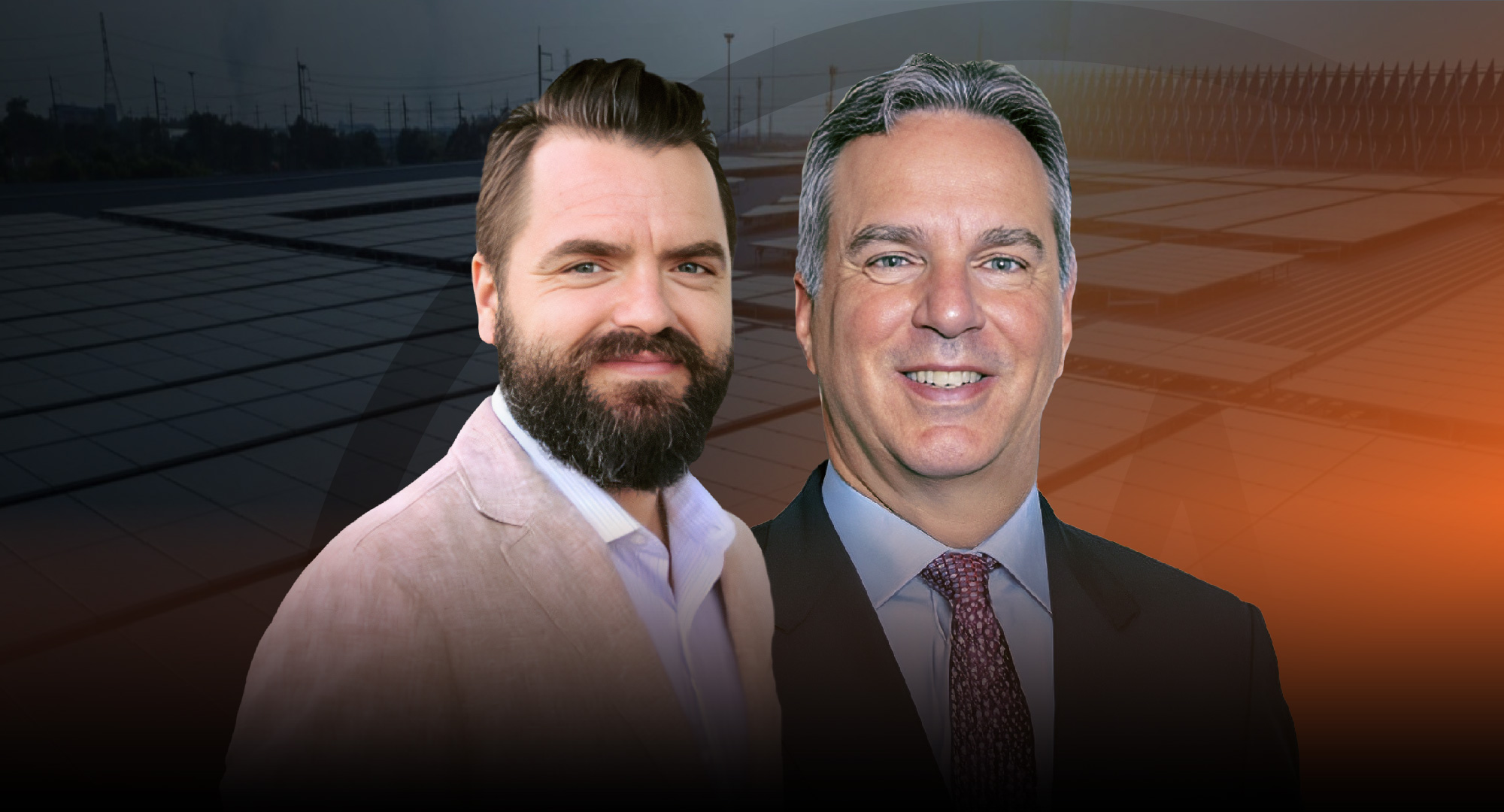
Real Estate/REITRyan Yetzer, Senior Director of Sustainability and ESG at Essex Property Trust, tells Sean about the real challenges of implementing sustainability across a portfolio of 250+ properties.
From innovative approaches to EV charging infrastructure to practical solutions for solar implementation, this episode of The Future of CRE Sustainability offers a masterclass in large-scale property sustainability. Ryan Yetzer, Senior Director of Sustainability and ESG at Essex Property Trust, walks Sean through the strategies behind managing sustainability across a massive portfolio of 250+ properties.
Ryan also shares his invaluable insights on achieving their ambitious 35% decarbonization goal by 2030, balancing financial returns with environmental impact, and effectively scaling sustainable practices. Learn how Essex Property Trust is revolutionizing the multifamily sector while maintaining strong financial performance and resident satisfaction.
Topics discussed:
- Implementing comprehensive technology solutions for resident satisfaction while integrating sustainability initiatives to reduce utility costs and enhance property amenities.
- A strategic approach to decarbonization through large-scale capital projects and behavioral improvements.
- A detailed framework for evaluating ROI on sustainability initiatives, combining financial returns with environmental impact metrics.
- Data-driven strategy for implementing EV charging infrastructure across properties, considering market penetration rates and future demand.
- Integration of sustainability goals into capital expenditure planning, prioritizing projects based on environmental impact and available incentives.
- Practical approaches to scaling sustainable practices across multiple properties through education, training, and standardized implementation processes.
- Lessons learned from implementing new technologies and the importance of proper training and communication with on-site teams.
- Comprehensive strategy for solar implementation, including navigation of utility regulations and maximization of tax credit opportunities.
- Utilization of building performance data and metrics to track sustainability impact and drive decision-making across the portfolio.
- Future outlook for commercial real estate sustainability, emphasizing the need for infrastructure development and industry-wide collaboration.
Previous Episodes
Highlights
Listen
Transcript
Note: This transcript was auto-generated and may contain minor errors.
Sean Swentek: Hello, and welcome to another episode of The Future of CRE Sustainability. I’m your host, Sean Swentek. Today, I am speaking with Ryan Yetzer, Senior Director of Sustainability at Essex Property Trust. Ryan, thanks so much for joining me today.
Ryan Yetzer: Thanks for having me, Sean. Really looking forward to our conversation.
Sean Swentek: Essex, incredible player in the space, especially around sustainability initiatives. So I’m excited for today’s conversation. Jumping in, I know Essex has a strong focus on resident satisfaction. What role does technology and sustainability play in your offerings?
Ryan Yetzer: I’d say first and foremost, technology is the bigger piece, with sustainability kind of coming in after that. Our residents have a technology that provides them a portal from the time that they maybe toured the property all the way through the time that they might want to leave the property, trying to ease that transition and make it seamless as possible. We have pieces of tech and software that makes it easier when they go to lease, when they move in, move out—all those types of things are pretty automated, and that’s something we’ve worked on. The whole end result is to make sure it’s a seamless experience for residents.
For sustainability, when it comes to what my group does and how we impact them, typically what you’re thinking about is how do we lower their utility costs? That’s first and foremost. That’s usually what they’re going to care about. But the other intangible benefits are maybe they have better lighting, maybe they have more efficient heating and cooling, and maybe this is something that’s important for them if they’re an environmentalist themselves. So it might be a leasing tool for us too to say, hey, we have a greener property than the people down the street.
And then finally, given that our footprint is heavy in California and Washington state, we have a lot of our residents drive electric vehicles. So it’s important for us to have that amenity as well to offer EV charging. Those are all things that play into the resident satisfaction. And again, they kind of dovetail off of what we do from a tech side.
Sean Swentek: How do you prioritize environmental initiatives and sustainability upgrades across such a large property portfolio?
Ryan Yetzer: I’m glad that you asked it this way. It’s kind of a two-pronged approach. What my group is primarily responsible for is identifying and implementing large scale capital projects that will drive our decarbonization efforts towards our ultimate goal. We have a publicly facing goal that says we’re going to decarbonize from 2018 to 2030 by 35%. So our goal is to implement those large capital projects. You’re thinking large scale lighting retrofits, you’re thinking solar projects, things like that that are really going to move the needle.
However, multifamily is very tricky, and we only control a small portion of our space. Really, we have to rely on our site teams and our residents to partner with us in this. So when I think environmental initiatives, that’s a different piece. We have to train and educate the people that are interacting with our assets on a daily basis. We have a small corporate group where we run those capital projects, and we’re pretty good at that. That’s a long-term strategy, and it involves a lot of approvals and red tape that you might have to get through to actually implement those.
In the meantime, what our goal is to get what I would call passive decarbonization, and that’s by getting our site teams and our tenants educated to the point where they’re actually doing some of this for us. A lot of this can come from behavioral improvements, and it’s just getting the people the resources they need to actually enact and act on those behavioral improvements. So while we do focus on the large capital initiatives, our group’s goal is to also implement those processes and provide that education and those resources, because otherwise people just don’t know. They don’t know what they don’t know, and our goal is to get them all the items they need to make those decisions.
Sean Swentek: What’s your framework for evaluating the ROI of these different ESG initiatives and sustainability initiatives?
Ryan Yetzer: From sustainability, especially at project level, it’s the same as any kind of investment capital you might put into your asset. Or if we want to purchase an asset, you run a proforma, you underwrite the deal, and you understand, does this meet our return threshold? We do the same thing with a lot of our capital projects, what we call revenue generating. So while we still have to have money to pay for these projects, it does kind of come out of a separate bucket for a lot of groups such as ours because we’re creating our own little revenue area.
Lighting is pretty simple. You might come in and they might be 70% more efficient if you put LEDs in over fluorescent. That’s a pretty simple math problem to say, alright, how many hours do we run the lights? What was the efficiency before versus now? How much did the project cost? You spit out an ROI or we do an internal rate of return. And if it meets our threshold, we go forward with the projects.
The other piece that you might get into later is that we try to tie each one of those dollars that we spend on a project like that—how much does it move the needle on our ESG goals? So there’s two things that we take into account when we’re evaluating them: the ROI, and then also how much does this move the needle towards the goals? Combine those together, and then you get a pretty good idea on should we move forward with this project, or is this money spent better elsewhere?
Sean Swentek: Ryan, you mentioned EV charging. I actually just yesterday was talking to a property owner, and this topic came up, looking at financing structure and infrastructure investment and cost-benefit of losing parking spots to put in EV charging. How do you specifically, when it comes to EV charging, look at the ROI and the investment costs? And how do you make that balance for you in your properties?
Ryan Yetzer: We—and I assume a lot of our peers do the same thing—we have a pretty, I’ll call it a priority list. So we have, say, 250 assets, and we have a number ascribed to each one of them on this is where we should spend some EV dollars on because of many factors. We do a lot of market research. We update that pretty regularly to say, what is the EV penetration rate in that area? What would we expect the five-year run rate to be? And there’s also a lot of financial factors into it too. So if you’re maybe in a more affluent zone, we’re going to probably need more EV charging. And we’re also then looking at what are our competitors and peers offering because we at least have to meet that competitive threshold. But then we want to be leaders in the space a lot of times too. So we do want to make sure that we’re not losing—we don’t want somebody to come there and say, this is a great place, but I need somewhere to charge my car. And that’s the last thing we can do.
And that, unfortunately, is also the hardest thing to evaluate because very rarely will you get somebody that says that or fills out some paperwork. We don’t have much detail on it. But what we can do is look at if we have any existing EV charging, how much is it utilized? And then year over year, we can kind of come up with some underwriting to say, we would guess in five years, we would need this many. And that’s how we prioritize and come up with what our count would be, because it’s much cheaper to do—say we need 30 in five years, but we only need 10 today. We take that into account in our IRR calculations to understand, alright, so long term, we’re going to need 30, and that’s the way that we move.
Sean Swentek: Speaking of planning, how are you integrating sustainability goals into CapEx planning and ultimately balancing your capital expenditure budgets?
Ryan Yetzer: I kind of mentioned that, but it really is tying how much does this dollar move the needle on our ESG or sustainability goals. So if we need to get to 35% by 2030, you can do that problem pretty easy to say it’s X amount of times that we need to eliminate per year. And that essentially creates how much money do we need to get to that threshold each year. And it’s not all coming from capital, like I mentioned. So we have maybe a percentage that’s subscribed to. We need to get there—maybe we need to get to 60% to 70% through our capital projects. And we’re, again, we do still need the money to pay for these projects. We don’t just get to write blank checks for all this stuff. But again, that’s how we prioritize.
So say we have 100 projects we want to do, and maybe the top 20 move the needle up to that 50%, 60% range. But the bottom 20, maybe we already have 100% green power at that site or something like that. Or maybe it’s already performing pretty well based on the behavioral improvements that we’ve implemented. And maybe we deprioritize that to further project a little bit further down the line. And then the other piece is available incentives. So if we have available incentives and we believe that they might be short term, we would probably prioritize that project over one that maybe they’ll be available for many years.
Sean Swentek: What is the most effective way to scale these sustainable practices across multiple properties if you’re someone who has a larger portfolio like yourselves?
Ryan Yetzer: It’s interesting. I’ll go out to a site, and you can just start making a checklist in your head as you’re walking around. It’s like, wow, if I was just in charge of just this site, I could do this. We could decarbonize this thing. Three to five years, we’d have it at net zero. With 250 properties, you can’t exactly do that. So again, it really is educating the people that are interacting with the site, coming up with a global portfolio goal, and then you start drilling into the asset level.
So if we have 35%, ideally, that means that every one of our properties is going to decarbonize at 35%. That absolutely won’t happen. So we have to get an asset profile, is what I would call it, for each one of those different types of properties. And what I mean by that is, we’re somewhat simpler because we just have multifamily, but we still probably have five to 10 different property types. Like, a downtown high-rise in San Francisco doesn’t operate the same way as a garden style in Fresno operates.
So we try to, while we’re getting that passive savings that we mentioned earlier, we’re developing a plan behind the scenes of saying, what attributes do we need to gather from the site level to develop this asset plan? And that’s kind of the next step. We still know that these larger capital projects are good projects because they show good returns. What we don’t know is exactly what the best use of our dollar is in every instance. And that’s what building out an asset profile will hopefully accomplish. That’s where I’d hope to get at some point. And that’s somewhat newer. Don’t know how many people are doing exactly that, but that’s my goal anyway.
Sean Swentek: Great goal. Can you share a trial program or something that maybe didn’t go to plan and how you learned or pivoted from that?
Ryan Yetzer: We don’t have any failures at Essex, of course. But in all honesty, I’ve only been at Essex for about two years, and a lot of the pipeline I inherited a little bit, and they’re somewhat tried and true. So a lot of the pilots we’re running are somewhat underway now, I would say.
What I can speak to is that I’ve run a lot of pilot programs in my six, seven plus years in the sustainability space, and yeah, some of them don’t succeed. There are a few factors—maybe it’s just a bogus product, that’s certainly possible. But the biggest reason that I see things like that not succeeding is the miscommunication or no communication between what the corporate level wanted to do when they implemented a large project or something like that, and not communicating that to the end user, which might be the on-site technician, it might be your landscaper, it might be your HVAC controls operator, somebody like that.
So, for instance, I know that I used to install LEDs at a lot of our properties when I was in medical office. And one of our spots had a lot of dark space. So we’re like, oh, let’s put in this really robust control system on top of the LEDs. Every time nobody’s in that space, it’ll dim down to like 10%. We’re going to increase that savings. Well, nobody trained up the tech on-site. And when they get a dark call and they have to keep going back to that dark call and they have no idea how to operate this new robust control system that they’ve never heard of, well, they just bypass the system and make it obsolete. So basically, ruining any kind of payback we had from installing that—those are the biggest pieces I see that are misses on pilot programs, is that we don’t do a good job of communicating that to the end user to make sure they have the tools to succeed.
Because when we implement a project, we essentially walk away. We may measure it afterwards to make sure it’s still a good project and it’s performing the way we modeled, but the reason it wouldn’t perform the way it’s modeled is that it’s not being operated correctly or operated as designed.
Sean Swentek: How do you go about structuring your ESG and sustainability programs to ensure consistent implementation across all your properties?
Ryan Yetzer: I would say that’s training and providing resources at the global level. How we do it internally at Essex, we have a monthly, we call it a coffee talk. I assume a lot of people have stuff like this where everybody in the company is a part of this. So we have opportunities there to get site teams. We have leasing teams. We have everybody that you might want to be on that call. That’s your opportunity to address them and try to include them as much as you can in your sustainability journey.
And what I really try to do is try to highlight how does this actually impact their day-to-day jobs. The guy that works at one property might really, really be an environmentalist, really love to do these things, and just want to do them because he knows it might be the best thing for the company, might be the best thing for the planet, whatever it might be. The guy down the street might not care at all. He wants to know, how does this help me do my job? I already work 50 hours a week. I don’t want to work more to do anything that you’re telling me to do. So it really is trying to outline how does this impact them in a positive way.
And a lot of times it is that utility costs are down. That means less complaints from your tenants. Maybe you have less bulbs out because now we have LEDs. Maybe you have less cold calls because we have more efficient HVAC. All those types of things are things that you can highlight to make sure that you include them in the journey as opposed to saying, hey, please do this for me. When you change the paradigm to where it’s like, hey, this is a journey that we’re both involved in and it benefits us both, we’re probably going to get better results.
And probably more consistency. I think to speak to the consistency piece, what you see a lot is you might have one-off conversations with maybe a regional manager, and they just totally get it. And you’re like, wow, this person knows what they’re going to do, and that region’s going to run well. Well, we’re not having those one-off conversations with every single regional manager. The problem is if we don’t extrapolate that and put it into a process and give a resource to everybody across the company, we’ll have one region that’s outperforming the others, and it’s an unfair balance. And it’s not due to anybody in the other regions’ performance issues. It’s just that we didn’t give them the tools to succeed.
Sean Swentek: Essex has been a leader in sustainable investments. You’ve got well over 100 sites with solar. What’s been your biggest learning as you’ve decided to invest in these alternative energy sources?
Ryan Yetzer: Biggest learning for me, because I did not operate in California much, is it’s very tricky in California due to the California Public Utilities Commission—the CPUC. So the way that you look at it, you know a little bit about it probably, but they somewhat make it restrictive and very difficult to navigate the renewable energy challenges. And it’s very tough to understand when we have grid problems and we have all these issues in California, why taking some of that load off wouldn’t be beneficial to everybody. But ultimately, it might impact bottom lines, and I understand that as well.
So that’s the biggest impact or learning curve I’ve had, is dealing with the utilities. And to their credit, they’re still giving out incentives in some ways to make sure some of this stuff happens, but they also are inundated with so many requests that they’re most likely understaffed to deal with these requests. So you also get a lot of delays and things like that that are hard to anticipate and hard to work through because these are large dollar projects. A solar installation might cost you $1 million, $2 million, $3 million. That impacts our budget largely when we have a delay because we can’t get maybe a power shutdown or something. So those have been kind of the biggest challenges we faced from a renewable energy standpoint.
Sean Swentek: Your team was making investments in solar well before the IRA passed. Was tax credit transferability—like, a lot of the REITs I talked to, that was a big unlock for them. Did it meaningfully change the trajectory of Essex plans, or have you guys kind of been committed to this path for a while now?
Ryan Yetzer: I inherited a lot of this, and my predecessor implemented a lot of the solar projects early on, which to his credit, he’s a pioneer. I will say what it does is it unlocks a whole lot more properties that maybe it will get us to that threshold we talked about earlier. So maybe we need to get to a percentage of threshold to say this is a project that’s viable, and it wouldn’t be viable unless we had that 30% to sometimes 40% credit. So it certainly unlocked a whole lot more properties for us. I would say almost any one of them with roof space in California could have made work.
Again, getting back to the restrictions that were imposed by the CPUC, we had a very limited time to do so. So when I inherited the program, we had a few months, basically, to say, alright, we can get every project we can applied to under the old rules. The new rules are a lot more restrictive and make sure that a lot of our returns just don’t work long term. So we’re going to have to reevaluate how do we continue the solar program after this grace period, which goes until 2027, I believe.
So once we install all of those, we still want to—solar’s a big part of what we need to do. Even though a lot of our portfolio will have solar at that point, there’s still a lot that won’t, and we need to come up with ways to make it work. And in my mind, that probably means keeping that power on-site so that we don’t have to rely on selling it back to the grid, which would mean some sort of battery storage on-site.
Sean Swentek: Sounds like the biggest unlock was projects that may not have papered pre-IRA to work with the incentive to see if the numbers add up. That’s great.
Ryan Yetzer: Absolutely.
Sean Swentek: What metrics have you found most valuable for tracking portfolio-wide sustainability impact?
Ryan Yetzer: It’s just building performance and rate increases too. I mean, the biggest piece for us, again, we will gather all those sustainability attributes. We’ll make our decisions. We’ll identify initiatives or projects or whatever we need. But the metrics that we have to look to after the fact to make sure that we’re not—we’re not being sold a bag of goods, basically. Like, all of the underwriting and the models that we’re providing, we have to check back on those. So after a year or two, we have to look back and say, is this project performing? And if it isn’t, why not? Is it again, it gets back to where we’re sold a bag of goods that was no good, or is it that we’re not operating the thing, whatever it is, as designed?
So we do those look-back analyses to make sure that they’re performing so that we can continue that program. If they’re not, we probably would just have to reevaluate how we would go about that specific initiative. But it’s reporting data and performance, usage and everything like that.
Sean Swentek: How are you using building data to drive those sustainability decisions?
Ryan Yetzer: Good segue. I mean, you’ve probably heard of all the platforms out there that basically just take your usage data and pop it into some sort of calculator, and you can sort by it. We really haven’t found one that’s worked for us, so we do it internally, but we still use our data that we get from our utility bills to make decisions. And that basically tells us how’s our portfolio performing, at least for our operational zone, which would be our scope one and scope two emissions. That’s first and foremost. So we can pretty easily filter to say, which one’s using the most energy per square foot or per unit, however you want to measure it.
And then secondarily, because we operate in California and Washington, which has benchmarking requirements, we partner with utility programs and we get all of that bulk data for our whole property. We enter that into Energy Star Portfolio Manager. We’re able to back that out to get a pretty good usage profile for our tenants as well. So we’re pretty lucky. I don’t think a lot of our peers would say that they have 90% to 100% coverage on their tenant data, but we are lucky that we do. So we’re able to layer that on top of it and say, how has this asset performed as a whole? As opposed to how did the hallways and the parking lot perform? The better question is, how does the whole building and the whole site operate? And we’re able to do that since we have that available data from our tenants or what we call our scope three.
So we use all of that, we filter it, and we come up with, alright, well, these are our biggest opportunity zones because they’re operating more inefficiently. We can cross-reference that with any kind of opportunities we’ve sourced from our attribute collection or our data collection on the site level to say, oh, well, this one has a really huge open roof for solar, and it’s performing pretty poorly on the electrical end. Those two things make sense. Let’s go look at that project. If it was performing very well on the electrical end and it had a bigger roof, maybe we wouldn’t look at it that way. But you marry those two things up, like opportunity, current performance, and risk, and it gets you a pretty good idea on where to spend your resources.
Sean Swentek: You mentioned battery storage earlier. Everyone I talked to in the CRE space, they’re kind of on the fence or it just feels—how are you seeing that opportunity for your properties? Is it really around the bend, or is it still something further down the line?
Ryan Yetzer: I can say we are looking at it. As anybody else you’ve spoken to, it’s cost prohibitive. It ruins your returns. Batteries don’t make any money. They might make a solar project work a little better because you don’t have to sell back to the grid. But again, batteries present two challenges, actually more than two. But the first one is it’s a pretty big upfront cost, and so we have to put them somewhere. You have to have the space in your building or somewhere at your site to put them, and then you have to maintain them and eventually have a plan to recycle them at some point, which I don’t think we’re even looking at yet. And all those things cost money.
I think what you’ll see, it’ll be like solar was maybe 10 years ago, 15. Pretty cost prohibitive unless you have some heavy incentives. But I think within five years or so, we’ll come up with some pretty good options on how to make this work, maybe. My real goal is that you’d marry that up with additional EV charging. So you could use that on the back end and get that to maybe cover what you may or may not have lost on purchasing of the battery.
Sean Swentek: Love that idea. You talked about it a little bit earlier, but how else are you leveraging technology to really inform your sustainability success?
Ryan Yetzer: We’ve tried a lot of technology options. And a lot of it is really good in a nutshell, is what I would say, but it’s really tough to say—I’ll just say if I had my perfect world, there’d be like 10 systems we’re running from a sustainability end. Those all cost way too much money as a one-off. If there was a perfect system that did all those things, great. In my opinion, we can leverage what is publicly available in many cases and run our own internal analysis, and that’s what we try to do. So we’re not super technologically advanced on this end other than we create our own internal tools and use them, which are just proprietary to us.
So the technology piece is not as big of a piece of our sustainability journey at present. We have tried a whole lot of things out, and we just haven’t bought them. I’d say the biggest pieces of tech are on the EV front. We’re looking at a lot of different ways that automate and adjust for time of use and all that type of stuff so that we’re maximizing our revenue and getting really just getting a fair deal for the kilowatt hour that we’re offering. But other than that, the tech is pretty basic as far as we do lighting retrofits, we do solar, we track the solar, and that’s where we’re at right now.
Sean Swentek: We’ve talked a bit about capital expenditure, but solar and EV charging, unfortunately, are not set it and forget it. How do you look at the operating expenses that are part of that package, and how do you budget for that as you look at your sustainable investments?
Ryan Yetzer: For granted, it’s integration and making sure the end user—and in my case, it’s really just communication with our operations team because, yeah, the only budget I really run is a large capital budget. As you said, there are miscellaneous costs that come down the road. It comes out of somebody else’s bucket, and it’s unfair just to pop something down on a site and be like, see you later, guys, figure it out. So a big piece for us and what I’ve seen around is that if you don’t maintain them or put in the process to maintain them long term, they just won’t get maintained. They don’t lose your returns.
So take a solar installation, for example. They don’t operate very well unless you clean them. They don’t operate very well unless you trim the trees around them so that they don’t get greened over them all day. They don’t operate very well if one of your tenants throws a beer bottle and breaks one of them. There’s a myriad of problems that I’ve seen that unless you’re talking to your site teams and making sure they’re involved in this process or that you give them the budget or make sure they have the budget to deal with these items, that they’re just not going to do it. And it’s no fault of their own. They just don’t have the budget or the resources to complete those items. So it is up to us when we implement a project, put an initiative into place that we’re following up and making sure that those people have the resources to make sure it works long term.
Sean Swentek: Another great lead-in. How do you measure sustainability program success cross-departmentally?
Ryan Yetzer: Well, cross-departmentally is a little tough. I would just say we look at our goals. Are we trending towards our goals every year from a portfolio perspective? And then you dial down into the asset level and say, which one of these are not going in the right track? I can say from 2018 to today, we’re pretty right on trend. We’re doing a really good job. But if you looked what’s in there of 250 assets, many of them are not part of that trend. They might be going against that trend. So it’s our job to identify when those trends are going the other way and understand what’s happening there.
Are we operating inefficiently? Did we maybe add a wing or a couple ADUs that we didn’t know about, or something like that? There’s maybe vacancy went down. And actually, this happened a lot—we turned on a lot of systems that were off during COVID. There are all these things that you don’t take account for, and then the data does give you that information. You can go back in and say, hey, this one’s not performing to the trend that we need, and we put a little more resources into it. So that’s just how we measure it.
And then from a project perspective, I mentioned earlier, but we do what we would call like a look-back analysis. We would take—we said that we were going to save, let’s just say, $100,000 a year on the solar project—are we saving $100,000 a year? If we’re not, why not? It’s just not super easy to do that. It’s not simple as saying, well, last year we paid $500,000, and five years from now, we’re paying $400,000 at worst. Probably not going to work that way because of how many different factors go into that, so you have to look at it more from an avoided cost standpoint.
I can tell you in NorCal, we usually would model maybe 3% to 5% inflation rate for utilities. We’ve seen as much as 20% in one year. Most of those projects, if you just looked at it straight, it maybe had cost you $500,000 five years ago when we installed it. It’ll probably cost you more than $500,000 today due to that inflation. However, if you look at the usage profile and combine it with all of the kilowatt hours we would have been paying for at the same rate, it’s actually the returns are much better than what we even modeled because we’re offsetting a higher rate than what we had modeled. So it’s not as simple as just saying we’re saving X amount of dollars. You have to look into how it’s what comprises that $100,000, and it’s usually the usage that you have to anchor off of.
Sean Swentek: Based on your experience with large portfolios, what’s your one piece of advice for scaling sustainability programs effectively?
Ryan Yetzer: I think I touched on it earlier, but my favorite way to think about this—and this can be maybe you’re new to a company and you’re trying to run a program like this. Maybe you just bought 300 buildings. We need to figure out how to incorporate them into our own sustainability strategy. What I really think is the best way to do it, there’s a set of best practices that you can just instill from day one. And then you have to gather the data, make sure that you understand which ones of these are the biggest opportunities because the performance doesn’t match to our standards. And then after that, you make sure that those best practices are implemented. Try to get that passive decarbonization going while we’re evaluating the larger piece of this, which is gathering data attributes, creating asset profiles, and understanding where our risk and opportunities are across the portfolio.
But again, I think aligning with key frameworks to understand what is an ideal decarbonization end goal for you is a good starting point. So we have a 35% goal right now, but we’ve also committed to science-based target initiative recently, which is most likely going to increase what that goal looks like. But again, it’s a tried and true system that people use all over the world, and it’s really going to show what is an ideal path for Essex as a portfolio. And you could apply that across any kind of portfolio that you would inherit. Or maybe if you’re starting off at a new company, you would come in and you’d try and align and come up with a framework that aligns with what your company wants to do.
The way that you can probably do that is usually run a materiality assessment internally and externally and really include as many stakeholders as you can, all the way down to, for us, it’d be the tenant level, the site level, up to the investor and the board level, and to understand which each one of those stakeholders thinks is important. That’s how you determine this is the path forward. If none of those things jive or they don’t talk to each other, we’re going to have four different goal sets, and that just won’t work out long term.
Sean Swentek: We’re in the midst of some pretty significant change in public office across the nation. Are you anticipating changes to your strategy? Do you feel like there will be impact on sustainability initiatives or the way you embrace them at Essex?
Ryan Yetzer: I think regionally, certainly. Probably not for us. I’m not anticipating a whole lot because of where we operate. California is already more aggressive than most of the country in many of their goals. There’s the EV goal that they have. We have a whole lot of things that play into our wheelhouse of actually, we’re going to continue the sustainability journey.
And ultimately, our shareholders care about this. It’s not “go woke, go broke.” There’s a reason that our investors care about this stuff. It’s not because they’re benevolent millionaires and billionaires for the most part. Maybe they are. Maybe they’re not. What they really care about is it makes more money to be a sustainable company, a sustainable portfolio. And that’s ultimately what matters. So it can be as political as you want to make it. Ultimately, what we do is save the company and the shareholders money.
Sean Swentek: That was really well said. Last question. What’s your dream or what do you see as the future of CRE sustainability, whether at Essex or in the industry-wide? What is—if you put on your prognosticator’s cap, what do you see down the road five, 10, 15 years?
Ryan Yetzer: I’d like there to be more uniformity to the approaches. So we talk to our other REIT folks. We have peers. And luckily, because we’re all going through the journey kind of at the same time, I’m trying things that may or may not work. One of our peers might be trying something that may or may not work. It’s important for us to be able to break down the traditional boundaries that you might face and see each other as competitors. In my opinion, if we’re—if we have a true goal of sustainability and environmentalism, we’re all on the same team in that part. I want them to also succeed in that journey, and that means that they might give me some tools that will help me succeed. And I’m not saying that’s not happening today, but I think maybe at all levels, it would be beneficial for us all to work a little bit closer together.
I’d like if we’re going to involve politics or govern these processes at all, that needs to be a little more uniform too. It’s very tough. I can say we only operate in two states. It’s not as tough. But I’ve been on portfolios that have 30 or 40 states, and it’s virtually impossible to say that I’m going to do the same thing in Florida as I am in California. It’s just very tough to do that. So if there’s going to be any government, not interference, but I’d say assistance on these types of things, that should be uniform as well. And then we should also be making sure the infrastructure is put into place as opposed to just throwing out mandates.
So it’s like EV charging is one of those things. I’m in full support of EV charging. However, across the nation, we really don’t have the infrastructure to say everybody needs to have an EV. We don’t really have the grid to support that. So we have to make sure that we’re putting those pieces into place and not just saying, hey, let’s go carbon neutral next year. Well, I can’t do that without all of the infrastructure and all the pieces that go into that. And we need to be—we need to think that through and not just say the things that our investors want to hear. We really need to think that all the way through what that means from end to end. And that’s as a RE or any kind of real estate or asset owner needs to think that through.
Sean Swentek: Before we wrap, Ryan, if people want to learn more about Essex Property Trust or your properties or want to connect with you directly, where’s the best place for them to go?
Ryan Yetzer: Well, you can look me up if you ever want to talk to me. You can look me up on LinkedIn. It’s just under Ryan Yetzer, so it’s easy enough to find me. EssexPropertyTrust.com, I believe, is our website, and we have a really great ESG report if you just want to learn more about our sustainability and ESG initiatives. We do release that around April, so we’ll have a refresh of that here in five months or so. I think that’ll give you most of the information you need.
Sean Swentek: Ryan, it’s really been a pleasure meeting you and hearing from you and all the great work at Essex. Tune in next time everyone on the next episode of the future of CRE sustainability. I’m your host, Sean Swentek. Until next time.
Ryan Yetzer: Thanks a lot, Sean.
What's next
ESG + CRE = ROI
Decrease Costs 32 min
David Natt, SVP of Asset Management & Sustainability at Avanath Capital Management flips the script on ESG in affordable housing, proving that green initiatives can be a goldmine when done right.
Watch