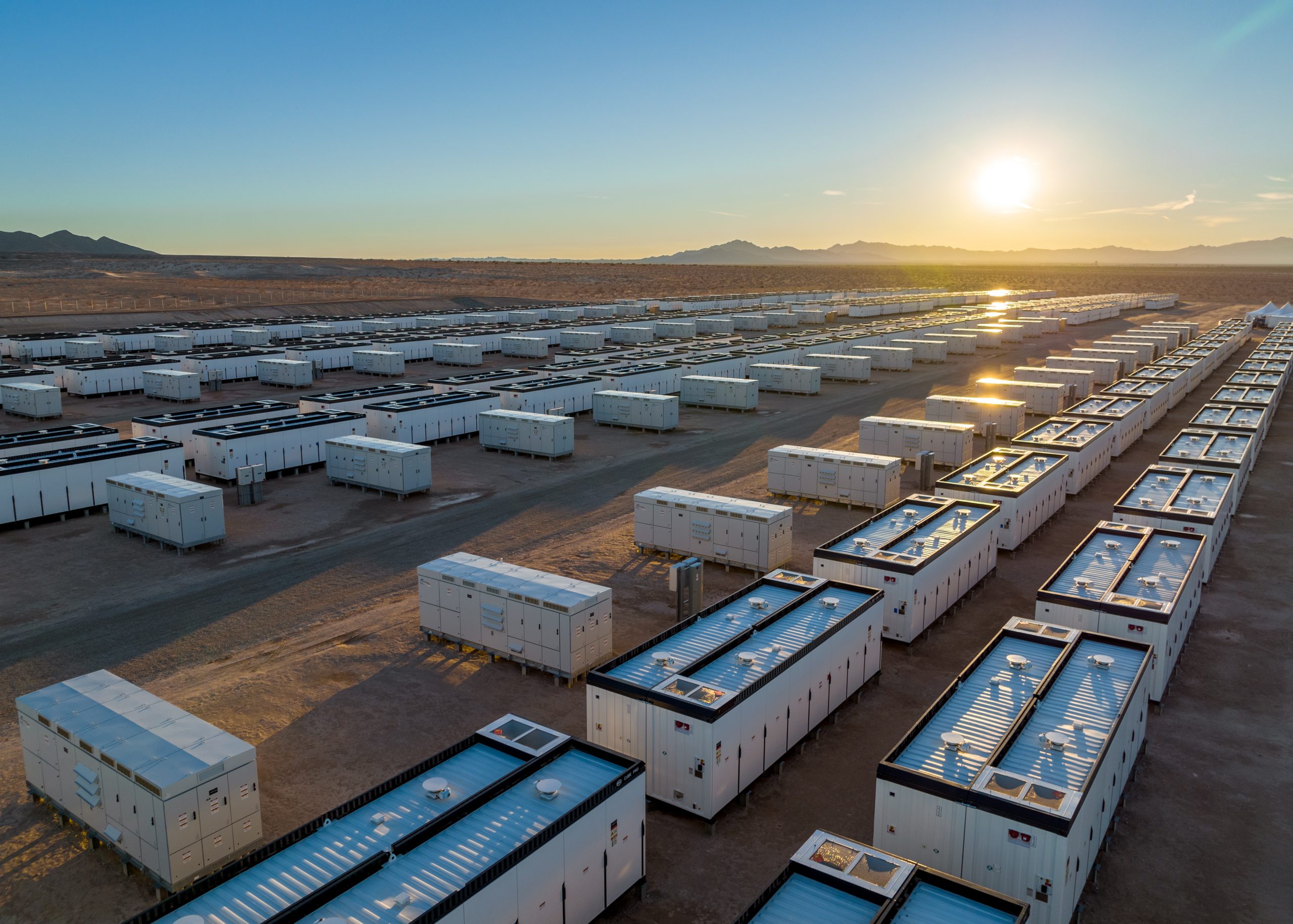

Why a Battery's Past Determines Its Future (and Your Returns)
Developer/IPPZamiyad Dar, Senior Director of Energy Storage at Pivot Energy, warns that BESS is an asset where the past determines the future, and that solar developers who model storage like PV, or chase the same markets as everyone else, risk degradation, revenue, and financing surprises.
Battery storage is an asset where the past determines the future. If you don’t charge at 10 a.m., you can’t discharge at 3 p.m., so each dispatch decision has consequences later.
Zamiyad Dar, Senior Director of Energy Storage at Pivot Energy, tells Sean how a solar developer with no battery projects became a solar-plus-storage player in under three years. He breaks down degradation guarantees as a day-one modeling and financing input, the non-linearity of interconnection queues, and why one battery runs a five-hour cadence in one state and three hours in another.
Topics discussed:
- Why battery storage is an asset where past determines future
- Proactive policy planning to keep the storage pipeline growing
- Degradation guarantees as a day-one modeling and financing input
- The non-linearity of interconnection queues and congestion positioning
- Why the same battery runs different cadences by geography
- Auxiliary HVAC and cooling choices driven by climate and altitude
- Overbuild versus augment decisions under ITC and CapEx constraints
- Load pockets, behind-the-meter limits, and how the grid actually flows
Previous Episodes
Highlights
Listen
Transcript
Sean Swentek: Hello, and welcome back to The Future Current. I’m your host, Sean Swentek. Today, I’m joined by Zamiyad Dar, Senior Director of Energy Storage at Pivot Energy, one of the leading IPPs in North America. Zami, thank you so much for joining me today.
Zamiyad Dar: Thanks for having me.
Sean Swentek: Our industry has really been defined, if we think about PV and battery, by a historic boom-bust cycle — the solar roller coaster, or the “solar coaster,” as we call it in the space. Pivot Energy, where you are now, has been one of the most consistently growing IPPs for years. What do you believe are some of the secrets to the organization’s success?
Zamiyad Dar: That’s a question I’ve been asked before, and I guess it’s because it shows in the numbers, right? I don’t think there’s one thing I can pick. If I had to pick three things, the first would be the talent and the employees we have. I’ve had a very diverse career working in consulting, ISOs, utilities, large companies, and small companies, so I’ve seen different levels of expertise and talent in the industry. What I see at Pivot is that the people on our team are really the best in the industry — the top three, top five people you would come across in their field.
When it comes to financial modeling and analytics, I’ve never seen anybody do it better than the person leading that team, throughout my career. Same thing with our grid interconnection and integration process — the person leading that team is one of the leading experts in the field. The people leading these different teams are really top-notch talent, and that helps when you have such a strong team. Working together with industry experts and industry leads really leads to this kind of success.
The second would be that it’s a bottom-up approach. I think it was Steve Jobs who said, “We don’t hire smart people so we can tell them what to do. We hire smart people so they can tell us what we should do.” That’s what I’ve seen from the company leadership as well. They’re relying on people who are not just experts in their field, but top-level in their field, and they’re really listening to them and implementing that vision.
I’ll give an example from my own experience. Sometime last year, I was really worried about all the post-OBBBA and FEOC compliance and projects not penciling. It was very hard to get a project done the way it used to be done before OBBBA. I was visibly worried at one of our company events, and our CFO asked me about it. I told him why I was worried, and he said, “Don’t worry about it. Do your diligence, and if something doesn’t work, we won’t pursue it. You’ll go find something else that will work.” My boss also often tells me that finding that something is not good — finding a “no” — is also a good thing. If you figured out that something isn’t a good strategy to pursue, that’s also a good outcome, so don’t be disappointed. So that’s what I see: a truly bottom-up approach that relies on the talent they have and listens to what the experts on the team are suggesting.
The third would be a very proactive approach rather than a reactive one — really thinking about what is going to happen, not just in two or three months, but how things are going to evolve one or two years from now, and planning your pipeline and your projects with that vision of the future. Before July Fourth of last year, there was a lot of talk about OBBBA, but Pivot was ahead of that. We were looking at what legislation was being passed, and many people at Pivot, including myself, had actually read the text of the bill. We were planning accordingly: if this happens, here’s what we can do; if that happens, here’s what we can do.
I was thinking about what other options we had for getting batteries that would be eligible for the ITC. We even started looking at non-LFP batteries and their operational parameters, and working with integrators on how to integrate them post-OBBBA — even before the bill was passed. Once the bill was passed, we took immediate action: how we could safe harbor projects, and how we could find companies intending to build BESS in the US that would be eligible for ITCs. We started looking for partners very early on. That proactive approach, instead of a reactive one, has helped us not just keep the pipeline alive, but grow at the same pace.
Sean Swentek: I love what you just said, because everything you mentioned in those three pieces ties back to building a great culture. I love that Pivot has identified experts, allows them to do the thing they’re experts at, and lets them think proactively about how to solve problems before they become issues, rather than being reactive.
I remember back almost five years ago, when Omnidian and Pivot first partnered together, we used to work with your teammate Angie a lot. I asked Angie, “What was the reason you chose to partner with us initially?” And the answer was that our cultures were so aligned — we thought the same way about bringing in experts and allowing them to do what they do best.
As I think about you and your expertise in BESS and all the other types of energy generation, storage, and deployment throughout your career, Pivot has brought in someone to help develop the future of their business, which is adding storage to its PV success. What is this moment like for you, getting to be at the forefront of building the BESS unit at a company that’s been so successful in PV?
Zamiyad Dar: I feel very proud, really. When I joined about two and a half years ago, we didn’t have any BESS projects. We were still a solar developer looking to add BESS. I’m glad our entire company took on this initiative to learn what a battery is and how it can help solar generation, increase clean energy penetration on the grid, and provide grid services. The entire company raised its level to become BESS experts — in development, in BESS construction, and in asset management. I feel very happy that in such a short span of time, we were able to transition ourselves from a solar developer into a solar-plus-storage developer.
I think the core value is how we can take this technology — BESS is not a new technology, but it’s one we haven’t deployed at mass scale on the grid so far — and use it to continue what we were doing. BESS essentially is not a generator, right? It doesn’t produce energy. What it does is allow you to put more solar and more wind on the grid, and provide grid services. That’s another thing I feel very good about: the entire industry is catching on, and that penetration is increasing every day.
Sean Swentek: You mentioned BESS is not new. I think you said you were developing BESS projects almost twenty years ago, so you’ve been around this for a while, and now you’ve been at Pivot for a few years building this program. What are some of the most important mistakes for growth-stage companies in our industry to avoid? I’m thinking of companies like Pivot that are transitioning from offering only PV to BESS as well, IPPs looking to scale nationally, or developers looking to move from a develop-and-flip model to an IPP model. What have you learned along the way, Zami? If you could give these folks some guidance, what mistakes should they avoid?
Zamiyad Dar: I think the last one is very important — a developer moving from development to an IPP model — because it’s so different. If you’ve never constructed a project, you don’t have experience with site clearing and very basic things you never even think about. How is the BESS actually going to get to the site? These are 100,000-pound containers. You need roads that can get them to the site. You need a crane to move them. How big is the foundation?
So if a development company decides it’s now going to be an IPP, it needs people with leadership experience in all the areas a developer doesn’t have: construction, asset management, O&M, operations, and long-term asset optimization. Those variables aren’t in a developer’s equation, but they are very important in an IPP’s equation. That’s one thing I would always say: have people with experience in the areas you’ve never worked in.
In terms of what to be aware of when you’re pursuing a high-growth strategy, I think the general theme is to plan for things that can go wrong, and don’t assume your rosy analysis is going to be that rosy. If you’re looking to enter a market that provides very high revenue in July, don’t assume your BESS will operate in July. Plan for how you’ll deal with it if things don’t go the way you thought. You always have to have those things sorted out early in the development and strategy phase rather than later.
There’s one more thing I’ll say. I often use this term in our company: we need to build a wormhole. A wormhole connects two different points in time and space, and the example I give is that you build a wormhole that connects the teams at the back end of the process to the front end of the process. Anybody involved with asset management, trading, battery dispatch, or O&M needs to be involved when the design is being made, when the equipment is being selected, and when the strategy is being designed. They can give valuable input. They may not know everything about the front end of the process, but you need to connect those different points in time to the present day so you’re well prepared for the things that can go wrong.
Sean Swentek: I love that analogy. I didn’t think outer space would get into the conversation today — I’m thrilled. Someone must have told you my favorite niche topic is space-based solar. But I love that wormhole analogy. That’s really brilliant.
Zami, you’ve spent time inside utilities and ISOs, so you’ve seen congestion, dispatch, modeling, planning, and interconnection issues from the other side. How has that experience changed the way you evaluate a project now from the developer and IPP side?
Zamiyad Dar: A lot. I always wanted to work at a developer, but I also always thought I needed to get a lot of different flavors — ISOs, consulting, utilities — before I went to work at a developer, because I thought that would prepare me very well.
The way we approach things now is very different. I’m not saying we operate in a completely different way from the rest of the developers, but a lot of our engineering and analytics is all in-house. We created our own dispatch optimization models for strategy and planning. We create our own engineering design up to 30% internally, and then we outsource it. So our reliance on external parties for early-stage strategy and design is limited.
One example I’ll give: you often see interconnection queues getting clogged up and congestion happening. It’s generally because everybody is relying on the same sort of study, and they outsource their design. Let’s say two or three companies are doing that outsourced design. They’re using the same assumptions, so everybody gets the same answer, and everybody goes to the same queue position. That’s actually a very nonlinear problem, because the optimal answer before you solved it changes after you solve it — there are seven other players with the same answer, and everybody’s running toward it.
The example I always give is traffic. Let’s say your route to the office is very crowded at 8 AM, and you think, “I’m going to beat this by leaving at 7 AM.” But if everybody starts thinking that, the traffic is going to shift to 7 AM instead of 8 AM.
That’s one of the things that has influenced me — to really think about the nonlinearity in these things. If I go into this location, how will the results change if two other competitors go into that location? If we’re looking to take advantage of grid congestion that exists today, what if the ISO decides to build a transmission line in five or six years? If my project relies on that congestion to earn revenue for the next twenty years, what is the risk? You have to quantify how long a transmission line would take to get built and what the chances are that it gets built.
For example, in New York, we had a lot of offshore wind coming, and there were plans to build offshore wind transmission. But with a small decision change — a wind turbine doesn’t get built, an administration change happens, the transmission line doesn’t get built — all of those variables need to be analyzed as their own little scenario. Then you can see how these different possibilities play out while you’re planning and strategizing. You can say, “What I have looks very good, but only a little bit of perturbation can make it very bad. So I won’t pursue that. Maybe I’ll pursue my second-best answer, because it performs very well under other scenarios that have some possibility of occurring.”
Sean Swentek: I love that you’ve got that multi-pronged approach to planning a strategy. I don’t see that all the time, and I think it’s really smart and probably a big reason you’ve seen success at Pivot.
You mentioned earlier that even the best-laid plans don’t always result in the rosy outcomes we all hope for, especially in this industry, which is beset by macro conditions that impact our best-laid plans. What is a big lesson you’ve learned in your career that influences how you operate today?
Zamiyad Dar: About ten or eleven years ago, batteries were so expensive, and at that point I just didn’t think this would ever happen. That was something where I feel I really missed that the cost of BESS could drop so much that it would become very valuable. On top of that, we had flat load growth for years and years, and it just didn’t look like we would have the level of electrical infrastructure spending we’re seeing today, or that so much BESS would come online in different states.
That has really changed how I approach things — to think about how things can change in the future, and to start planning for outcomes that may never look real to you. I don’t remember exactly what the cost was in 2016, but I think it was twice what we’re seeing now, or maybe more. When I look back, I often question how I could have gotten that wrong. It was such a great opportunity — it still is a great opportunity — but I didn’t think it would be a big thing. I was still working on it at ISOs and in consulting, but internally I was very skeptical that it would ever be profitable or lucrative, because the costs didn’t make sense at the time.
Sean Swentek: 100%. It really tracked the same way we saw on the PV side, where the cost to install has dropped dramatically over the years. I agree with you — I don’t think any of us saw this battery boom coming the way it has.
I mentioned this earlier: a lot of folks with expertise in PV are now recognizing the opportunity in batteries and adding them. For developers adding battery storage assets to their PV strategy, what do you think are the biggest challenges they’ll face, and what have you really had to plan differently for?
Zamiyad Dar: There are so many. First of all, you may not even have space at an existing site. Even if you do have space, you may not be able to integrate storage with the existing solar infrastructure, because maybe you don’t have enough interconnection availability — the line may not have enough capacity. Or maybe there’s just no need, in the sense that the location where you have your site is doing just fine. What I’m generally seeing is that because there’s still potential to receive the ITC for BESS, the first thing that comes to everybody’s mind is, “Maybe I can do that.” But I’ll say that it’s not one solution for all projects.
Another thing I say is that BESS is an asset where the past determines the future, and solar is not that kind of asset. I’ll give an example. How a solar plant performs at 3 PM is almost independent of what it was doing at 10 AM. If you had sun at 10 AM, you generated. If you didn’t, you didn’t generate. What the operation looks like at 3 PM is independent of what happened in the past.
BESS is an asset where the past determines the future. If you didn’t charge the battery at 10 AM, you can’t discharge it at 3 PM, right? If you were completely charged by noon and prices drop, you can’t charge — the BESS is full. Those types of things are very important with BESS. You have to be aware that your decision right now is going to have consequences five hours from now, or the next day. That’s something a developer or IPP with only solar experience needs to understand.
When you’re modeling these assets and seeing what the return looks like, what I’ve seen traditionally with solar is that there’s no need to run an hour-by-hour model. You have one profile, and you can simply calculate the revenues. But with BESS, it’s a chain. What you did in hour one affects what you can do in hour four. So you need planning models that run on an hour-by-hour basis for the life of the asset and apply degradation based on the asset’s operation. Then you can forecast how the asset earns revenue under different scenarios, how much O&M it will need, and how much cooling it will need.
BESS also has a lot of auxiliary and HVAC load that often gets neglected. Because we’ve heard about fire and safety issues, it’s very important to keep a battery storage system cool and keep the HVAC running properly. But we all have electricity bills and HVAC in our homes, and it costs money. That’s a hit to project revenue that often gets ignored and needs to be looked at if an asset owner is interested in developing BESS.
Another thing I often point out is that operation and maintenance on BESS is different from O&M on a solar asset. With solar, you may need panel washing or vegetation management. With BESS, it’s more about whether the HVAC is working properly and whether the cells are balanced. It’s a very different type of O&M requirement, and you need solid experience with it to really operate those assets.
Sean Swentek: Yeah. BESS really takes asset management, O&M, and optimization and adds complexity, opportunity, and challenges to the nth degree.
Moving to asset management — for our listeners who are actively managing BESS and are maybe a little further along, I would love your take on this. When you’re looking at an aggressive battery dispatch strategy to capture high price spreads and other opportunities like arbitrage, how do you balance those decisions against accelerated cell degradation and the maintenance costs that come with having to repower more quickly because you’re cycling more often?
Zamiyad Dar: I think the first step is to have a very good setup for data acquisition. It’s a chicken-and-egg problem, because if you haven’t had enough assets, how do you get that data? We still don’t know exactly: if I’m charging too aggressively, is degradation going to deviate too much or too little? If I’m operating in a hot environment, how much is my HVAC demand? How much does that HVAC demand change if I charge slowly?
That’s a good example. If I charge in four hours to fill the battery versus charging in eight hours, what is my HVAC demand? What is the stress on the system going to be? There just isn’t enough data right now, because the assets haven’t operated for that long. And even where there is data, each IPP only has it for themselves, right?
So the first step is to have a good data acquisition system, and then a good data analytics system. One thing we plan on doing at Pivot is this: as our assets come into operation, we’ve already worked through the data acquisition piece — how we’re going to collect all the data related to BESS operation and see how degradation, efficiency, and HVAC load are affected by the way the BESS is operated. Then there’s the data analytics piece, where you identify patterns. Can we estimate something from that and take it back to our planning and strategy model, so we can insert the effects of aggressive cycling versus passive cycling into the project planning stage?
It becomes even more complicated with hybrid projects, because now you’re trying to identify patterns between solar generation and BESS behavior. For example, if I have a solar forecast and I’m running BESS at nighttime, how much do I discharge, knowing I almost want to run out right as solar comes back up, but also don’t want to run out too soon? That kind of interplay is also very important for hybrid assets.
So: data, data, and data. Data collection, data analysis, and then data implementation — which can take some time.
Sean Swentek: I love it. Speaking to your experience on the utility and RTO side, and thinking about our industry as a whole and what you mentioned earlier about the huge nationwide spike in demand for electrons — a lot of people on our side of the fence ask, “Why can’t we just build everything all at once? Let’s get things online faster. Let’s speed up interconnection.” Some people say, “We’ll just build behind the meter and interconnect later.” For those who have never been on the other side of the fence and sat as a market operator, what are people not understanding about how the grid actually behaves, and what’s necessary to meet the need in today’s era of rapidly rising energy demand?
Zamiyad Dar: It’s not one thing. ISOs don’t have all the power. I worked at ISOs, and ISOs can’t really decide where generators are going to go. All they can do is run the market and see how the grid behaves and whether it’s reliable. On the other hand, state PUCs can’t implement interstate transmission, because pretty much every ISO except ERCOT is under FERC jurisdiction. So there are many complicated regulations involved.
Even if we look at the behind-the-meter aspect, behind the meter may work in one location but not in another. I’ll give an example. Generally, everybody thinks, “If I have a lot of solar and I build behind the meter, my battery is going to charge from the solar and discharge in the evening.” Everybody thinks that. But imagine you have a behind-the-meter battery near a substation that’s maxed out and can’t take more solar, so the battery can’t even charge from solar — and the site is a school. A school has no load after 5 PM, right? So how are you going to use the battery at 5 PM in that location? It’s those types of things: what the load profile is behind the meter, and how you operate the asset against that load. The load shape behind the meter matters. Not all load shapes are going to be the same.
Some of it is also the way we evaluate the grid. We’re still evaluating grid interconnection capacity based on one single peak hour, instead of flexible interconnection, where you allow projects to interconnect but then curtail them during the peak hour. That’s one thing that could be changed, but getting it implemented is a very long process, because the ISO has to get it approved and then FERC has to approve it. There is progress being made there.
The other thing is that when we look at the grid as a whole, we can say there’s a lot of solar, so we can just add batteries to capture it. But something that isn’t widely known in the industry — this is ISO terminology — is load pockets. There are pockets in pretty much every ISO that are so congested, with so much load, that you just don’t have enough transmission going in. You have to have something inside that load pocket. New York City is a good example. The Queens and Manhattan area is a load pocket. You can only build so many transmission lines. You have to have something within that pocket to operate reliably, because if you have an outage on a large generator, or your transmission lines outside Manhattan and Queens are congested, how are you going to serve that load? So there are load pocket requirements there. When I worked at a utility in MISO, it was the same thing — there were load pockets within MISO as well.
That’s what people forget. It’s not as if you can connect anywhere and get the energy to the load. Electrons don’t flow from point A to point B. It’s really complicated physics. Imagine you have five or six water reservoirs supplying your community. If I asked you whether a given water molecule came from Reservoir 1 or Reservoir 5, you just couldn’t tell me, because it’s such a complicated flow coming from all the sources. That’s exactly how power flows on the grid. An electron sent from a solar panel can’t really be tracked to where it’s eventually going to end up. It may end up going west while you think it’s heading east. The grid operates based on the laws of physics, which people don’t always understand.
Sean Swentek: I think that might end up way too advanced for the average audience of the show, but I love the topic. It’s exciting to think about.
Going back to something you mentioned — the service providers in the BESS landscape. With the growth of BESS, we’re seeing growth in new service providers popping up that are purpose-built for BESS, as well as those who have operated in PV and are adding BESS as a stack. As you look at service providers across asset management, O&M, optimization, and all these different pieces, is there a subtle green flag where you go, “Okay, these folks actually get it — they’re not just trying to take advantage of the next big market growth opportunity”?
Zamiyad Dar: I like that you framed the question as a green flag instead of a red flag, because usually you’re just watching for red flags.
Sean Swentek: Eternally optimistic over here.
Zamiyad Dar: Red flags are good to watch for too, but you’re also looking for green flags that tell you whether it’s a good partner to work with.
I think it’s any service provider — whether it’s O&M, software, or a consultant — that understands this is not a single solution that can apply to every project or every client. That’s what I always look for. I often get reached out to by somebody saying, “Our product can increase returns by 10%.” But that’s one case, in one market, on one asset. Maybe my asset isn’t operating that way. Maybe another asset owner’s asset was operating in a way that your product improved by 10%, but my asset is operating in a way that it only helps by 2%, and the cost doesn’t justify it.
The entire BESS operation is such a nonlinear problem. You mentioned aggressive cycling early on and how it affects behavior later. That’s a good way to think about it. If somebody is operating a BESS very aggressively, they may need certain types of services. They may need to augment soon. They may need software to keep track of it. But if somebody isn’t doing that, and they’re only looking to monetize three or four months a year and hit capacity targets, that’s a very different service need. Maybe their need is to look for issues that could suddenly shut off the BESS at the wrong time, because they’re trying to capitalize on two months of the year, and they want to make sure the asset operates during those two months. It’s like taking my car to the shop before a long road trip. Their need may be more seasonal, whereas another asset may be doing aggressive cycling every day, so its needs are very different.
So one of the things I look for in service providers — O&M, software, analytics, anything — is whether they’re aware that even if the BESS chemistry is the same, and even if it’s from the same manufacturer, different markets, different use cases, and different types of operation can completely change the answer, and the product they offer will become very different. Or do they think their product will just apply to every single project? That’s not the case. It’s very dependent.
For example, in the projects we’re building, in one state, our operation discharges in the evening and it’s a five-hour BESS. In another state, we’re discharging in the early morning and it’s a three-hour BESS. Same architecture, same DC block, same manufacturer — everything the same — but two very different project types. One operates twelve months a year; the other is more of a three- or four-month thing. So that’s what I always look for: how aware they are of the nuances between operation and use cases, and knowing that a lot of it depends on your strategy and operation, not one answer for all questions.
Sean Swentek: I love that. You can’t expect someone to come in and provide a blanket solution without that individual asset and geography expertise — and the humans behind it who understand the decisions that need to be made.
Zamiyad Dar: Yeah. I was talking with one BESS manufacturer that had started manufacturing in the US. It’s a good product. It checked all the right boxes. It would qualify for the ITC. It had a very modular build — I think you could build it in increments of 15 kW or 20 kW. So everything was good. But then I asked about the HVAC and cooling, and they said it’s not liquid-cooled; they’re using a lot of fans to keep it cool.
That product is good for a lot of different environments, and it can work. But if I were building in Southeast or Southwest Texas, I probably wouldn’t take it, because it’s not liquid-cooled. In the Northeast, it’s a very good product. Similarly, I can’t really use that product in Colorado or Utah because of the elevation. If you’re relying on an air-cooled system, the air is thin up in the mountains. My company is in Colorado, and I’ve experienced that. It’s a running joke — everybody asks if I’m okay whenever I go there. Everybody’s like, “Are you okay? The air is thin here.”
So you can’t use an air-cooled system up in the mountains in Colorado or Utah, or anywhere the altitude is greater than 5,000 or 6,000 feet. How you pick the product based on geography becomes very important, like you were saying. It’s not a blanket solution. That’s very important.
Sean Swentek: You really brought it home. The expertise of having managed assets in different geographies under different conditions goes a long way toward understanding the actual issues that might attack a battery.
On the topic of degradation, since we’re talking about cycling and how it impacts it: how should an asset developer think about a degradation guarantee, when I think we’re still pretty early here, and no one fully agrees on how batteries actually age in the field or how varied that can be?
Zamiyad Dar: One of the questions I ask DC block manufacturers every time — in the first meeting I have with any DC block manufacturer — is, “Do you offer a degradation guarantee?” Because that’s one of the most important ones. People often talk about round-trip efficiency guarantees, but that’s really more a function of chemistry, and it doesn’t change much from manufacturer to manufacturer — there are minor differences. Degradation is the big one, because you can’t really undo it. If you’ve missed that operation window and the system has degraded more, now you have to build more to replace it. There’s no way around it, so you want to get it right early on.
If you get a degradation guarantee, some of the things we’ve seen in our contracts are that the manufacturer will either reimburse you for the lost degradation — a prorated amount based on how much you’re paying — or replace aging cells with new cells. That’s a very complicated process, but those are the ways we’re working with our OEMs on degradation guarantees: if things go wrong, what mechanisms will make us whole? Whether they reimburse us for the shortfall based on how long it has gone on, or whether it goes to a total replacement.
But one thing people don’t often think about is that the number actually goes into your model build. That degradation curve goes into how you size the project on day one and how you finance it. When you go to a lender or financier, they’ll ask, “You have this tolling agreement for four hours of discharge, and you’re only building four hours of battery. This is going to degrade. What’s your plan?” And they may say, “You haven’t accounted for these costs, so we can’t lend you money for this project.” So you actually have to show all your degradation curves to the lenders and financiers, and show how the battery will lose capacity from 100% to 70% or 80% over twenty years, and how that will affect its revenue.
It’s even more complicated if you have a hybrid project, by the way, because solar degradation is lower than BESS degradation, right? If your solar is degrading at 0.5% and your BESS is degrading at 2%, that’s a very different curve. So the revenue follows a blended curve that’s neither 0.5 nor 2. In our case, we’re seeing 0.78. Just last week, I was asked by some of our lenders, “Why is this degradation 0.8% when BESS is 2% and solar is 0.5%?” And I had to show mathematically that it’s actually a blended result of two different technologies that degrade differently.
So that’s one aspect: how you plan for degradation. Your modeling and revenue projections have to account for it. Then you have to make sure your OEMs are putting it in the contract.
Then there’s also the question of whether you’re going to overbuild or augment. That’s a whole different calculation, because first of all, it depends on whether you have enough cash. Do you have enough money to buy a five-hour battery instead of a four-hour battery? If you don’t have enough capex, you’re relying on augmentation. But then it’s a question of how the cost of batteries will evolve over five years. If you expect the cost of batteries to drop, that’s a pretty straightforward answer. However, then it becomes a question of the rate at which it drops versus how much revenue you’d make now if you overbuilt. If that rate of drop is significantly higher, then you obviously make the decision to augment.
But there’s the ITC piece here too. I’m not getting the ITC on any augmented BESS capacity five years from now, so I might as well overbuild and get the ITC on it now. It’s such a dynamic interplay: Do I get the ITC or not? Will I need a lot of construction at the site when I’m augmenting? Do I need to build a new foundation? Do I leave space right now? If I have 10 containers, do I build a foundation for the eleventh one now? But what if that technology doesn’t even exist yet, and I build a foundation for something whose dimensions will completely change? A lot of things go into it. I know I haven’t given a clear answer, but there is no clear answer.
Sean Swentek: I love all the points you touched on. The takeaway for me is how important it is to have a really tight investor-operator relationship, because investors are depending on you to return data that matches this modeling and prognostication. We’re still so early, and it’s going to take follow-through to really reinforce that trust, because there’s so much money pouring into the space right now. It’s a bit of a land grab. I think the investors and operators that come out on top are the ones with a tight relationship, with data-backed knowledge coming back from the operator, and teams like yours that understand the degradation curves and the issues in these systems. Whereas I can picture an operator who’s focused only on revenue — overcycling, voiding warranties, and doing things their investor wasn’t expecting — and all of a sudden, on the back end, it’s really going to bite them.
Zamiyad Dar: That goes back to what we talked about very early on. Because we have teams that can do this in-house — the engineering design, the interconnection design, the hour-by-hour BESS operation design, and the financial modeling — we don’t have to go externally to collect all the information our investors are looking for. The answer is already available within our own organization, across different teams. We just collect that information, meet with our lenders, and provide it.
The first question you asked was how we’re able to grow so fast. I think it goes back to having really talented people — top-level talent in the industry, all working in their respective fields — and a lot of the work being done in-house. That way, we can take that information back to our investors and lenders, and we know how to answer their questions, because we’re the ones calculating and designing it.
Sean Swentek: I’ve got one or two last questions for you. You’ve been talking about the OEMs you assess and the service partners and other partners you work with. Pivot continues to grow. You’ve got a ton of operational assets and a huge development pipeline. For OEMs or service partners who want to work with you, what do you look for in a partner that you know will scale with a company like Pivot, which is national, at scale, and growing across different regions and technologies? What should folks bring to the table when they’re approaching you?
Zamiyad Dar: That’s a good question. One thing we talked about is realizing that it’s not a blanket solution for each project, especially with BESS. Operating BESS in Illinois is very different from operating BESS in Texas, so having a national footprint, or geographic diversity in that experience, is very important.
Also, these are dynamic assets, in the sense that operation determines the life and the revenue, versus a solar-only plant where — like I said — what it was doing at ten doesn’t really affect what it does at three. So it’s about understanding what the different alarms in the system mean, what notifications are happening today, and what the implications of those notifications could be two years or even two months from now. Because if you ignored an alarm on the BESS because you thought it was nonessential, two months down the road it might turn out that it was actually the check-engine light, and you decided to ignore it. So it’s knowing about different equipment and how it behaves.
On the construction side, what I’m seeing is a lot of need in terms of understanding what it takes to build a BESS asset — foundations, cabling, and everything — because we’re seeing different levels of expertise and widely varying cost estimates when we collect EPC bids for these projects. So that’s another thing: really getting on top of what it takes to construct this asset once the equipment arrives.
Trying to think of more things. I think we touched on the fact that the nonlinearity of operation is also very important — knowing that how a BESS was operated in the past is actually causing certain things, versus another BESS that doesn’t have the issue because it wasn’t operated that way. That obviously comes with experience — vast experience working with these assets.
Sean Swentek: Having the data, right? I think data is such a key piece as we scale.
Last one. You’ve been in the industry for a long time. As you’ve watched PV mature over the last twenty or thirty years, is there a lesson from that market that can be applied to BESS to prevent us from making the same mistakes?
Zamiyad Dar: It’s very similar to the PV lesson. I think it’s not to follow the herd. If you’re going to pursue a strategy and a market because everybody else is doing it — thinking there must be something to it because everybody else is doing it, so you just follow along — that’s something to be cautious of. I’m not saying it’s not the right strategy just because five other developers are doing it, but it’s the same thing as PV. If everybody starts building PV in one location, then there’s price cannibalization, right? That depresses revenue. So it’s PV penetration hurting future PV penetration. You’ve saturated the market, and you wouldn’t know it until it’s too late. That’s what we observed before.
So always think about the fact that it’s not about how things are today, but how things will be two or three years from now. If I make this decision, where will I land?
We’ve actually seen this already with BESS. Back in 2022 and 2023, batteries were making exceptional revenue in ERCOT. There was frequency regulation, there were high prices, and everything. So there was a big rush — “I want to build projects in ERCOT territory because they’re very profitable.” That was the truth of the moment in 2022 and 2023, but by the time those assets got into operation, the whole dynamic had changed, because now there’s oversaturation. BESS is still making money in ERCOT, but it’s not what your financial models were showing, or what your investors were looking at, two or three years earlier. It’s a lot more depressed. It’s the same PV-type phenomenon with price cannibalization.
So I would say one thing is to really think: don’t just look at the reality and the truth of today. Also see whether it’s going to be true three or four years from now, and what else you can do that puts you on the right path and differentiates you from your competition.
Sean Swentek: Wow. That was a much more amazing answer than I was expecting. Really brilliant, Zami.
This show is about the future of energy. It’s 2030, four years from now. We’re seeing a ton of growth in geothermal, in storage with batteries, and in other energy sources. What do you think will be the fastest-growing energy source in the US in 2030 — or energy deployment source, in the case of batteries?
Zamiyad Dar: I’ll say sodium batteries. I could be wrong, but I kind of want it to happen as well, because they have really good parameters and operational profiles. It also seems logical: sodium is more abundant, it’s less likely to catch fire, and there’s a lot of data center demand coming. So I have my fingers crossed. I’m hoping sodium is the next big thing in the BESS space.
Sean Swentek: I tend to agree with that. I love that answer.
Zami, thank you so much again for joining me. That’s all the time we have for today. For folks who might want to connect directly with you and learn more about what you’re doing, is there a place for them to go? Do you use LinkedIn? Is there an event coming up where people can meet you and learn more about you and Pivot’s work?
Zamiyad Dar: Yeah. LinkedIn is always the right place to reach out. I’m very active there, and I also post content about what we’re doing. Pivot’s energy storage page also posts a lot of content about what we’ve been doing. I often attend conferences and trade shows. I’m going to be at the Battery Asset Management Summit, speaking on FEOC and the ITC, how we’re navigating that, and what developers should watch out for. That’s in a week’s time. I’ve also participated in ESS USA in the past, and RE+ is always a good venue to catch up. So, a lot of places — and I’m always happy to connect on LinkedIn.
Sean Swentek: Amazing. I will see you at the Battery Asset Management Summit — I’ll be attending your session. It’s been an absolute pleasure, Zami, from Pivot Energy. Thank you for being on the show. For my listeners, I’ll see you on the next episode of The Future Current. Thanks for tuning in.
What's next
Webinar: Mastering BESS Technical Operations to Tackle the 72% Failure Gap
Assure Performance 57 min
72% of BESS failures occur within the first 24 months of operation. This webinar shows you how to protect your BESS portfolio's long-term ROI.
Read